


Origin: Netherlands
Nederlandse Kooikerhondje
Get reminders for your Nederlandse Kooikerhondje's vaccines
Vaccination and parasite reminders, food-safety scans and health records — free to start in the Pethls app.


Good for
The Nederlandse Kooikerhondje is the Dutch duck-decoy dog, a small spaniel-type breed built around one strange and specific job: working a duck decoy, or eendenkooi. The dog runs back and forth along the reed screens of a curved, tapering trap pipe, and curious wild ducks follow the flitting white-and-orange dog into the funnel. The white-and-orange coat with black ear tips, called earrings by fanciers, makes it one of the prettiest small sporting dogs around. Underneath the looks is a cheerful, sensitive, deeply people-oriented dog that weighs 9 to 16 kilograms and typically lives 12 to 15 years. Kooikers adore their families, keep polite distance from strangers, and light up when given gentle training and a sport to master. The breed's small gene pool carries a few serious inherited diseases, so buying from health-tested parents is not a nice-to-have but the whole game.
Temperament & personality
At home, a Kooikerhondje is playful, affectionate, and glued to its people. The breed was developed to work all day alongside one hunter at a duck decoy, and that partnership instinct survives intact. Expect a dog that watches your face, learns your routines, and would rather be in the room with you than anywhere else on earth.
The flip side of that sensitivity is reserve. Kooikers are naturally standoffish with strangers, not aggressive but politely unconvinced, and they take their time deciding about new people. Loud households, chaotic handling, or harsh corrections genuinely rattle them. A raised voice that a terrier would shrug off can set a Kooiker's training back a week.
That makes them a joy for owners who train with patience and rewards. The breed excels at agility, flyball, scent work, and obedience, and many still work as decoy dogs in the Netherlands. Their moderate size and adaptable energy mean they can live in an apartment happily, provided the daily walk-and-play quota actually gets met.
With children the honest answer is: wonderful with considerate kids, stressed by rough ones. A Kooiker will not tolerate ear-pulling with a Labrador's saintly patience. Families with young children should supervise closely and teach gentle handling from day one; families with school-age kids who respect the dog get a devoted playmate.
Vaccination schedule
Kooiker puppies follow the standard core schedule. The DHPP combination shot, covering distemper, adenovirus hepatitis, parvovirus, and parainfluenza, starts at 6 to 8 weeks and repeats every 3 to 4 weeks until at least 16 weeks of age, which usually means three or four doses in total. Rabies is given once between 12 and 16 weeks depending on the law where you live.
One year after the puppy series, both DHPP and rabies are boosted. From there, core vaccines typically move to every three years, while rabies follows your local legal interval. Because socialization is so important for this sensitive breed, talk to your vet about safe early outings between vaccine doses; puppy classes that require a first vaccination and a health check are a reasonable middle path.
Lifestyle vaccines are decided case by case. A Kooiker that swims, works in wet Dutch-style terrain, or visits daycare is a good candidate for leptospirosis and Bordetella cover. One breed-specific note for the vet file: because von Willebrand disease type III exists in the breed, any Kooiker with unknown or positive vWD status should be handled with awareness that injection sites can bleed more than expected.
Best food & diet
A quality complete food for small to medium active breeds suits most Kooikerhondjes. At 9 to 16 kilograms with a sporty lifestyle, typical adults need somewhere between 450 and 800 calories a day, split into two meals. Dogs competing in agility or working at a decoy will sit at the top of that range; a quieter companion needs less than owners usually think.
Puppies should eat a growth food for small or medium breeds until around 10 to 12 months. Kooikers grow fast in the first six months, and since patellar luxation runs in the breed, keeping puppies lean protects developing knee joints. Avoid letting a cute beggar talk you into constant extras; this breed's expressive face is very good at winning treats.
Use body condition as your guide rather than the bag's feeding chart. Ribs should be easy to feel, and there should be an obvious waist. Because this breed is sensitive in temperament, some individuals get soft stools during stress or travel; a consistent diet, unhurried meal times, and a slow switch over 7 to 10 days whenever you change foods keep the gut settled.
Common health problems
The Kooikerhondje nearly vanished during World War II and was rebuilt from a handful of dogs, so the modern gene pool is small and a few inherited diseases circulate in it. The good news is that Dutch breed clubs attacked the problem early with mandatory testing, and DNA tests now exist for the two worst conditions. The practical rule for buyers is simple: only consider puppies from parents with full test results in writing.
Von Willebrand disease type III is the most serious. It is a severe inherited bleeding disorder in which the blood cannot clot properly, and affected dogs can bleed dangerously from minor injuries, surgery, or even teething. A DNA test identifies carriers, and responsible breeders never pair two carriers, which makes an affected puppy from properly tested parents very unlikely. Ask for both parents' certificates.
Hereditary necrotising myelopathy, known by its Dutch initials ENM (erfelijke necrotiserende myelopathie), is a progressive spinal cord disease that appears in young dogs and causes worsening hind-limb weakness and paralysis. It is fatal and untreatable, but like vWD it has a DNA test, and testing has made affected puppies rare from reputable kennels. Polymyositis, an immune-mediated inflammation of the muscles, is the breed's current unsolved problem: it usually appears in middle age with difficulty swallowing, a stiff gait, or muscle wasting, and while there is no DNA test yet, it responds variably to immunosuppressive treatment.
Patellar luxation, a kneecap that slips out of its groove, is the everyday orthopedic issue. Mild cases cause an occasional skipping step and need nothing but weight control; severe cases need surgery. Vets grade it on exam from 1 to 4, and breeding dogs should be checked. Beyond these, Kooikers are generally sound little dogs, and 12 to 15 good years is a fair expectation from well-bred stock.
Allergies & skin
Kooikerhondjes are not hypoallergenic. The medium-length coat sheds moderately all year with heavier seasonal turnover, so this coat still sheds enough allergen to set off people with dog allergies, natural dirt-shedding and all. The breed's own skin, though, is usually healthy and undemanding.
When itching does show up, the usual suspects apply: flea allergy first, then environmental allergies to pollens and dust mites, then food allergy. Watch for paw chewing, recurrent ear trouble under those feathered ears, and pink-stained fur from licking. Because the ears are dropped and well-furnished, they trap moisture after swimming, and a Kooiker that loves water (most do) benefits from a quick ear dry-out after every dip.
One breed-specific caution: skin problems that need surgery or biopsy deserve extra thought in a Kooiker whose vWD status is unknown, since type III bleeders can have serious complications from small procedures. It is one more reason to have the DNA result in the dog's file early in life. Routine coat care is easy, and a bath every one to two months with a mild dog shampoo is more than enough.
Flea, tick & worm prevention
Keep a Kooiker on year-round flea and tick prevention. The breed's love of water, reeds, and long grass is genetic, which puts it in prime tick habitat on every country walk. Monthly spot-ons, oral chews lasting one to three months, and long-acting collars all work; pick one your routine will actually sustain and log doses so nothing lapses.
After walks in vegetation, run your fingers through the feathering on the ears, chest, legs, and tail, which is where ticks hide in this coat. Remove any tick promptly with a twisting tool. In vWD-affected or untested dogs, note that tick bites and removal sites may ooze longer than you would expect; persistent bleeding is a reason to call the vet.
Worming is standard: puppies every two weeks from 2 to 12 weeks of age, then monthly to 6 months, then every three months as adults or based on fecal exams. Dogs that swim in ponds and ditches or scavenge on walks have higher exposure to worms, so the quarterly schedule matters more for a typical Kooiker than for a city couch dog. Use heartworm prevention monthly in regions where heartworm occurs. Puppies can start young, but any dog over about six or seven months needs a heartworm test before the first dose.
Medications & dosing
All medication for a Kooikerhondje should be weight-based and vet-directed, and this breed gives that rule extra teeth. Between a 9 kilogram female and a 16 kilogram male there is nearly a doubling of body mass, so a dose that suits one Kooiker can be badly wrong for another. Weigh before dosing, every time.
The vWD type III issue reaches into the medicine cabinet too. Aspirin and some other drugs impair clotting further and should never be given to an affected or untested Kooiker without explicit veterinary direction. This is on top of the general rule that human painkillers such as ibuprofen and paracetamol are toxic to all dogs. For pain, vets prescribe canine NSAIDs like carprofen or meloxicam at per-kilogram doses, chosen with the individual dog's history in mind.
Dogs diagnosed with polymyositis are typically managed with corticosteroids such as prednisolone, tapered carefully over months based on response, and sometimes with additional immunosuppressives. These protocols are strictly vet-managed with regular blood work. Whatever your dog takes, record the drug, dose, and current weight in a health log so refills and emergency visits start from accurate numbers.
Grooming & coat care
The Kooiker's white-and-orange coat is far easier than it looks. It is medium-length, slightly waxy, and naturally dirt-shedding: mud dries and brushes out, and the breed stays surprisingly white without effort. A thorough brushing once or twice a week with a pin brush and comb keeps the coat healthy, with extra attention to the feathering on the ears, legs, tail, and trousers where tangles start.
Shedding is moderate year-round and steps up in spring and autumn. During those weeks, brush every couple of days and the loose hair mostly ends up in the brush instead of on the sofa. No trimming or clipping is needed; in fact the breed standard calls for a natural coat, and clipping can spoil its texture. The famous black ear tips need nothing special, just admiration.
Bathe every one to two months or after particularly swampy adventures, and dry the ears well every single time the dog swims. Nails need a trim every three to four weeks, and weekly tooth brushing (daily is better) protects a small dog's crowded mouth. Kooikers are sensitive about handling done roughly, so keep grooming sessions short, calm, and rewarded, and the dog will come to enjoy them.
How the Nederlandse Kooikerhondje compares
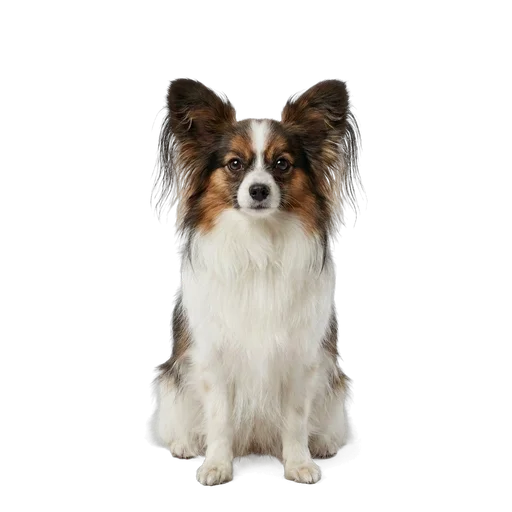
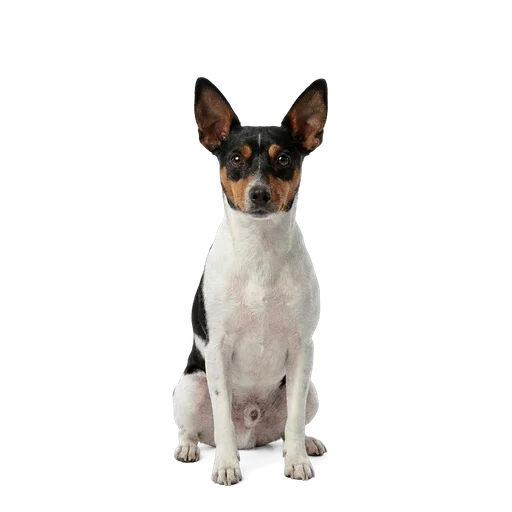
Deciding between similar breeds? Here is the Nederlandse Kooikerhondje next to Papillon and Rat Terrier.
| Nederlandse Kooikerhondje | Papillon | Rat Terrier | |
|---|---|---|---|
| Size | Small | Small | Small |
| Weight | 9-16 kg | 3-5 kg | 4-11 kg |
| Lifespan | 12-15 yrs | 14-16 yrs | 12-18 yrs |
| Activity | Active | Active | Active |
| Shedding | Medium | Low | Medium |
| Good with kids | Yes | Yes | Yes |
| Apartment-friendly | Yes | Yes | Yes |
Frequently asked questions
Is the Kooikerhondje a good first dog?
Yes, for a gentle, committed first-time owner. Kooikers are small, trainable, and eager to please, which is very forgiving of beginner mistakes. What they cannot forgive is harsh handling or an owner who skips exercise, so patience and consistency matter more than experience.
What health tests should Kooikerhondje parents have?
Ask for DNA results for von Willebrand disease type III and hereditary necrotising myelopathy (ENM), plus a patellar luxation exam. Both DNA-tested conditions can be largely avoided through carrier-aware pairings, so a breeder without paperwork for both parents is not worth your deposit.
How much exercise does a Kooikerhondje need?
About an hour to ninety minutes a day, mixing walks with play and brain work. They are sporting dogs at heart and shine in agility, scent work, and flyball. They settle beautifully indoors afterward, which is why a well-exercised Kooiker does fine in an apartment.
Are Kooikerhondjes good with children?
Good with calm, respectful children and genuinely devoted to their own family's kids. They are a sensitive breed, though, and rough grabbing or constant noise stresses them. Homes with toddlers need close supervision; homes with school-age children who handle the dog kindly are a great fit.
Do Kooikerhondjes bark a lot?
They are alert and will announce visitors, but they are not compulsive barkers. As decoy dogs they were bred to signal, not to make noise all day, so expect a warning bark at visitors and quiet the rest of the time, especially if the alert is acknowledged and the dog is well exercised.
Related breeds
Health and care information is drawn from established veterinary sources and is general guidance, not veterinary advice. See our sources
Keep records for your Nederlandse Kooikerhondje
Vaccinations, food and treat safety, allergy alerts and parasite reminders - all tracked for your Nederlandse Kooikerhondje in the Pethls app.