

Origin: Spain
Spanish Water Dog
Get reminders for your Spanish Water Dog's vaccines
Vaccination and parasite reminders, food-safety scans and health records — free to start in the Pethls app.


Good for
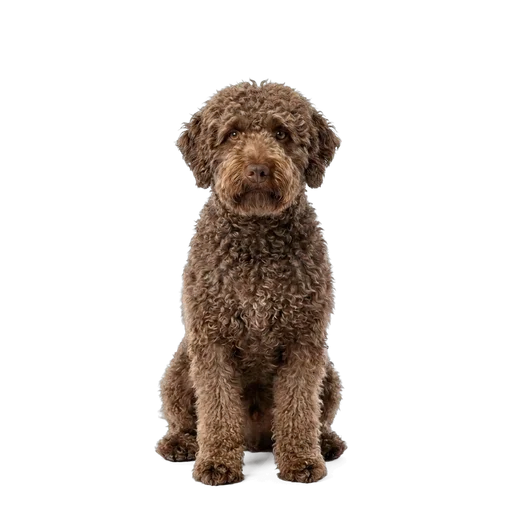
The Spanish Water Dog is a rustic, curly-coated worker from rural Spain that spent centuries herding goats and sheep in the morning and retrieving from water in the afternoon. It weighs 14 to 22 kilograms, lives 10 to 14 years, and comes wrapped in a single woolly coat that is never brushed and, if grown long, forms cords with a little hands-on help. This is a one-family dog through and through: intensely loyal to its own people, watchful of everyone else, and happiest with a real job to do. The minimal-shedding coat means the breed is often listed among low-allergen dogs, though no dog is truly allergen-free. Give a Spanish Water Dog work, structure, and early socialization and you get a versatile, clever partner; give it a bored life in the backyard and it will dig up the garden out of sheer boredom.
Temperament & personality
Everything about the Spanish Water Dog's character comes back to work. For centuries these dogs herded livestock and guarded the farm, and along the coast they worked with fishermen, retrieving objects and helping haul in nets. Whatever the job, the dog usually answered to one person whose word was law. The modern dog still thinks that way: it picks its people, takes them seriously, and treats having a job as a genuine need. Herding trials, agility, scent work, dock diving, or a demanding daily training routine all scratch the itch.
With its family the SWD is affectionate, attentive, and often comically velcro, following its chosen person from room to room. With strangers it is naturally watchful and aloof, and it makes a reliable alarm without being aggressive when properly raised. That watchfulness needs shaping: puppies require broad, positive socialization with people, dogs, and environments through the first year, or the natural reserve can tip into suspicion.
The herding brain shows up in daily life. Many SWDs try to gather running children, circle cyclists, or nip at heels in play, and this needs calm redirection early rather than punishment. They read their owners closely and pick up new tasks in a handful of repetitions. The catch is that they absorb sloppy handling just as readily, so consistency matters.
This is a rewarding breed for an active, consistent owner and a frustrating one for a household that wanted a decorative doodle-alike. An under-worked Spanish Water Dog barks, digs, herds furniture, and invents rules. A worked one is calm, funny, and deeply satisfying to live with.
Vaccination schedule
Spanish Water Dog puppies follow the universal core protocol. DHPP, the combination vaccine against distemper, adenovirus hepatitis, parvovirus, and parainfluenza, begins at 6 to 8 weeks and is repeated every 3 to 4 weeks until the pup is 16 weeks or older, for a total of three or four doses. Rabies is given once at 12 to 16 weeks according to local regulations.
Both vaccines are boosted at around one year of age. After the first adult booster, most vets recommend DHPP every three years, with rabies timing dictated by law in your country or state. Keep certificates accessible; sport and herding venues, boarding kennels, and cross-border travel all ask for them, and an active Spanish Water Dog often needs them for all three.
Non-core vaccines fit this breed's lifestyle more often than not. Leptospirosis is spread through water and wildlife urine, which is exactly where a water dog spends its weekends, so many vets consider it near-essential for the breed. Bordetella makes sense for dogs in classes, sports, or daycare. Build the plan with your vet around what your dog actually does.
Best food & diet
Feed a Spanish Water Dog like the athlete it is: a complete diet for active medium breeds, measured meals twice a day, and calories matched to workload. A 14 to 22 kilogram adult typically needs roughly 800 to 1,300 calories daily, with genuinely working or heavily sporting dogs needing more. Bodies vary, so treat any number as a starting point and adjust to condition.
Puppies do best on a medium-breed growth formula until about 12 months, kept deliberately lean because hip dysplasia occurs in the breed and excess weight during growth is a known risk multiplier. Slow, steady growth beats a roly-poly puppy every time, however charming the roundness looks under the curls.
Speaking of curls: the coat hides body condition completely. You cannot eyeball an SWD's waistline through that wool, so put your hands on the dog weekly, feeling for ribs under a thin covering and a tuck behind them, and weigh monthly. Because adult-onset hypothyroidism appears in the breed, weight gain that defies an honest ration deserves a thyroid blood test. Unexplained lethargy alongside weight gain is the classic pairing worth flagging.
Common health problems
The Spanish Water Dog is a rustic breed built by function, and most individuals are hard-wearing, but several inherited conditions are established in the population and worth screening for. A lifespan of 10 to 14 years is typical, and good breeding choices push dogs toward the upper end of that range.
Hip dysplasia leads the orthopedic list. Breeding dogs should have official hip scores (OFA, BVA, or FCI schemes), and buyers should ask to see them rather than accept verbal assurance. For the dog you already own, lean body weight and sensible exercise on varied ground are the best protection. Progressive retinal atrophy, a gradual degeneration of the retina leading to blindness, also occurs, and a DNA test exists, so both parents of a litter should be tested or clear by parentage.
Thyroid disease appears in two forms in this breed. Adult-onset hypothyroidism shows up in middle age with weight gain, dullness, and coat or skin changes, and is easily managed with daily medication. Congenital hypothyroidism with goiter is rarer and far more serious: affected puppies have an enlarged thyroid gland and stunted development. It is recessive, a DNA test identifies carriers, and breeding from tested parents makes affected litters very unlikely.
Addison's disease (hypoadrenocorticism) rounds out the list. The adrenal glands stop producing vital hormones, and the signs are notoriously vague: intermittent vomiting, weakness, poor appetite, and episodes of collapse that come and go. It is diagnosed with an ACTH stimulation test and, once found, most dogs do well long-term on hormone replacement. The key is suspicion; an SWD with waxing-and-waning illness should have Addison's on the rule-out list, and it never hurts to remind your vet the breed is predisposed.
Allergies & skin
The Spanish Water Dog is one of the breeds most often suggested to allergy sufferers, and there is substance behind the reputation: it carries a single woolly coat with no undercoat, sheds minimally, and drops far less hair and dander around the house than a typical dog. No breed is truly hypoallergenic, since the allergens live in saliva and skin as well as hair, so spend real time with adult SWDs before deciding, but many mildly allergic owners live comfortably with one.
The dog's own skin does need some watching precisely because of the coat. The dense wool holds moisture after swimming, and a curly coat that stays damp at skin level is a setup for hot spots and yeasty irritation. Let the dog drain and air-dry thoroughly after water work, part the cords or curls to check the skin underneath now and then, and take any sour smell seriously.
Itchy skin in this breed follows the usual canine pattern of flea allergy, environmental allergy, and food allergy, but two breed notes apply. Hypothyroidism often announces itself through the skin with thinning coat and recurrent infections, so a blood panel belongs early in any chronic skin workup. And because the coat is never brushed, owners find skin problems later than they would on a smooth-coated dog; deliberate hands-on checks once a week make up the difference.
Flea, tick & worm prevention
Year-round parasite prevention is non-negotiable for a dog that works in water, brush, and livestock pasture. For fleas and ticks, oral chews are particularly practical in this breed because spot-on liquids can distribute poorly through the dense woolly coat and frequent swimming shortens the life of some topical products. If you prefer a collar or spot-on, ask your vet specifically about water resistance and swimming frequency.
Finding a tick inside cords or tight curls is genuinely difficult, which is another argument for systemic (oral) protection that kills ticks regardless of whether you spot them. Still do physical checks after outings, concentrating on the ears, muzzle, armpits, groin, and between the toes where the coat is thinner.
Worming runs on the standard schedule: every two weeks from 2 to 12 weeks of age, monthly until 6 months, then quarterly for adults or as directed by fecal testing. Dogs around livestock have real tapeworm exposure, and dogs that drink from streams and ponds meet giardia regularly, so an SWD living its intended lifestyle justifies the disciplined end of the deworming spectrum. Add monthly heartworm prevention wherever heartworm is endemic, including parts of southern Spain, the Ebro valley, the Canary Islands, and much of the Mediterranean, after an initial test in adult dogs.
Medications & dosing
Dose everything by current weight, on veterinary direction, and remember that the coat lies about size. A corded or fully-coated Spanish Water Dog looks a category bigger than it is, and a freshly clipped one looks startlingly small; the scale is the only honest witness. With adults spanning 14 to 22 kilograms, guessing can put a dose off by a third.
The standing rules apply: no human painkillers ever, since ibuprofen and paracetamol poison dogs at small doses, and no leftover antibiotics from the cupboard. Vets prescribe canine NSAIDs such as carprofen or meloxicam per kilogram for pain and arthritis, with periodic blood monitoring for long-term use, which matters in a breed where hip dysplasia can mean years of anti-inflammatory support in later life.
Two of the breed's conditions are managed with lifelong, precisely dosed medication. Hypothyroid dogs take levothyroxine daily, adjusted by follow-up blood levels. Addisonian dogs receive replacement hormones, typically an injection of desoxycorticosterone every 25 to 30 days plus a small daily steroid dose, and their doses are tuned to electrolyte results over time. Both are routine once stabilized, but neither tolerates missed doses, so set reminders and log every administration in a health log alongside the dog's latest weight.
Grooming & coat care
Forget everything you know about grooming a curly dog, because the Spanish Water Dog breaks the rules: this coat is never brushed and never combed. Brushing wrecks the texture, frizzes the curl, and works against the coat's natural behavior, which is to grow into curls and then, if left long, twist itself into cords. The traditional routine is beautifully simple: clip the entire dog down to about a centimeter once or twice a year, all over and to one even length, then let it grow back untouched.
If you keep the coat long, it will begin cording on its own as it passes several centimeters. Your job is not to create the cords but to manage them: separate forming mats by hand down to the skin so cords stay narrow and air can reach the skin, and check weekly that no wide plates of felt are forming behind the ears, in the armpits, or under the collar. It is hands-on work in bursts, but there is no daily brushing bill to pay, which is why grooming needs land at medium rather than high.
Bathing is infrequent and low-intervention: use a mild dog shampoo, squeeze it through the coat without scrubbing or circular motion, rinse very thoroughly, squeeze out water, and air-dry. No blow-dryers on heat and no vigorous towel rubbing, both of which mat the wool. Corded dogs need long, patient drying time and must be fully dry at the skin to prevent mildew and hot spots.
The rest is standard maintenance with one coat-related twist: hair grows over the eyes and inside the ears. Tradition and the breed standard say never tie up or trim the face between clips, since the coat protects the eyes, but ear canals should be checked and kept clear as your vet advises, especially in a dog that swims. Nails every three to four weeks, teeth several times a week, and a full-body hands-on check whenever you do the cord separation.
How the Spanish Water Dog compares
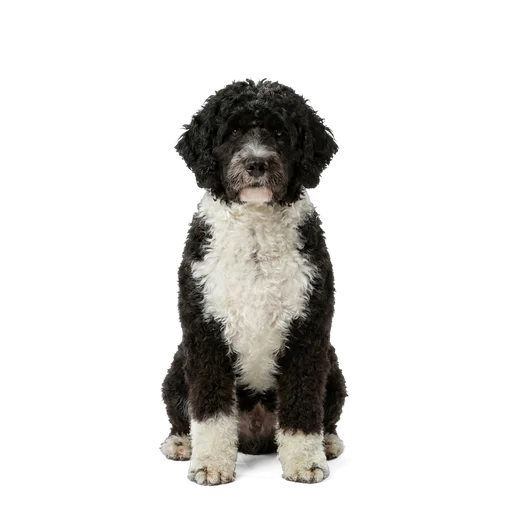
Deciding between similar breeds? Here is the Spanish Water Dog next to Lagotto Romagnolo and Portuguese Water Dog.
| Spanish Water Dog | Lagotto Romagnolo | Portuguese Water Dog | |
|---|---|---|---|
| Size | Medium | Medium | Medium |
| Weight | 14-22 kg | 11-16 kg | 16-27 kg |
| Lifespan | 10-14 yrs | 15-17 yrs | 11-13 yrs |
| Activity | Active | Active | Active |
| Shedding | Low | Low | Low |
| Good with kids | Yes | Yes | Yes |
| Apartment-friendly | No | Yes | No |
Frequently asked questions
Is the Spanish Water Dog hypoallergenic?
It is one of the better breeds for allergy sufferers: a single woolly coat, no undercoat, and minimal shedding mean much less hair and dander in the home. No dog is completely allergen-free, though, so spend time with adult Spanish Water Dogs before committing.
Do you really never brush a Spanish Water Dog?
Really. Brushing ruins the coat's curly texture. The coat is either clipped short once or twice a year and left alone as it grows, or allowed to cord naturally, with mats separated by hand. It is an unusual routine, but simpler than daily brushing once you learn it.
How much exercise does a Spanish Water Dog need?
Plan on 60 to 90 minutes daily, and make some of it mental. This is a working herder and water retriever that needs a job: agility, scent work, swimming, herding, or serious training games. Physical exercise without brain work leaves the itch unscratched.
What health tests should breeders do for Spanish Water Dogs?
Ask for hip scores, the DNA test for progressive retinal atrophy, the DNA test for congenital hypothyroidism with goiter, and general thyroid screening. Because Addison's disease occurs in the breed, also ask the breeder openly about it in their lines; good breeders talk about it, poor ones dodge.
Are Spanish Water Dogs good family pets?
For active families, yes. They are loyal, playful, and protective of their own household. They may try to herd small children, are reserved with visitors, and need consistent training and daily work, so they suit committed owners better than first-timers wanting an easygoing companion.
Related breeds

Health and care information is drawn from established veterinary sources and is general guidance, not veterinary advice. See our sources
Keep records for your Spanish Water Dog
Vaccinations, food and treat safety, allergy alerts and parasite reminders - all tracked for your Spanish Water Dog in the Pethls app.