

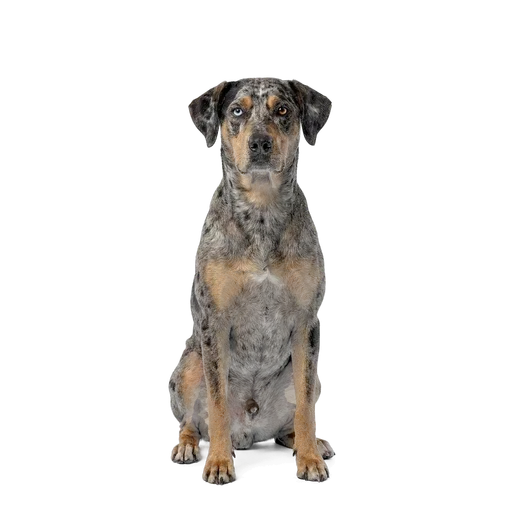
Origin: United States (Louisiana)
Catahoula Leopard Dog
Get reminders for your Catahoula Leopard Dog's vaccines
Vaccination and parasite reminders, food-safety scans and health records — free to start in the Pethls app.


Good for
The Catahoula Leopard Dog is Louisiana's official state dog, a hard working stock and hog dog developed in the swamps and woods of the American South. The name comes from Catahoula Parish, and the look is unmistakable: a muscular frame that runs from around 16 to 43 kg under a short merle coat splashed with leopard patches, often finished with pale glass eyes. This is a serious working animal, independent, driven and protective, that herds cattle by forming a living fence and bays wild hogs with real courage. Given a job, space and an experienced handler, a Catahoula is a loyal, capable partner for 10 to 14 years; given a flat and two short walks a day, it becomes a demolition crew.
Temperament & personality
Everything about the Catahoula's character traces back to its work. A dog expected to face a wild hog cannot be soft, and a dog expected to work half a mile from its handler cannot wait for instructions. The result is an independent thinker with a strong protective streak: watchful of strangers, territorial about its property and utterly matter of fact about both. It is not a breed that fawns over visitors, and it takes its own decisions seriously.
With its own family the Catahoula is loyal and often surprisingly affectionate, frequently attaching hardest to the person who works or trains it. Raised alongside children it usually does well, though its size, intensity and herding instinct mean play needs supervision and kids need to learn dog manners early. Same sex dog aggression is a known issue in the breed, and cats or livestock it was not raised with may be treated as work. This is not the dog for a home with a revolving door of unfamiliar animals.
The non negotiable is employment. A Catahoula needs an hour or more of hard daily exercise plus genuine mental work: herding, hog baying where legal, scent sports, agility, hiking with a pack, structured training. Firm, fair, consistent leadership from an experienced owner earns its respect; harshness earns resistance, and boredom earns dug up yards and eaten furniture. First time owners and apartment dwellers should look elsewhere, and reputable breeders will tell them so directly.
Vaccination schedule
Catahoula puppies follow the standard core schedule: DHPP against distemper, hepatitis, parvovirus and parainfluenza starting at six to eight weeks, boosted every three to four weeks until at least sixteen weeks, then again at one year. Parvovirus deserves respect in this breed's world; working kennels and rural yards see plenty of it, so do not shortcut the puppy series or let a pup socialize in high traffic dog areas before it is complete.
Rabies vaccination is required by law in most US states, though the exact mandate varies by state and local ordinance; it is given from twelve weeks of age with a booster a year later, then every one to three years depending on state law and product. For a breed that hunts hogs and works brush where raccoons, skunks and feral animals live, rabies cover is not paperwork theatre, it is genuine protection.
A working Catahoula's lifestyle argues for the non core extras too. Leptospirosis vaccination matters for dogs drinking from puddles and swamps, and the Lyme vaccine is worth discussing in tick heavy country. Ask your vet to build a plan around what the dog actually does, keep a written record of every shot, and use vaccine visits for the annual once over, including a look at hips in a breed with known dysplasia risk.
Best food & diet
Feeding a Catahoula starts with an honest answer to one question: how hard does this dog actually work? The breed spans 16 to 43 kg and everything from weekend hiking companion to full time hog dog, so calorie needs range roughly from 900 to well over 2000 kcal a day. A genuinely working dog may need a performance formula with higher fat and protein during the season; a neutered pet doing an hour of daily exercise needs a standard adult maintenance food and a watchful eye on the waistline.
Whatever the workload, pick a complete food where named animal protein leads the ingredient list, and feed twice daily rather than one large meal, and keep hard exercise separated from meals by an hour on either side. Body condition is the scorecard: you should feel ribs under light pressure and see a clear waist from above, and extra weight is a direct tax on hips that may already be imperfect.
Puppies from larger lines should be raised on a large breed puppy food that controls calcium and calorie density so joints develop slowly and soundly; a Catahoula pup does not need to be fat, it needs to be lean and steadily growing. Skip supplements unless the vet prescribes them. For adults in hard work, some handlers add joint support from middle age onward, which is reasonable to raise at a checkup rather than to self prescribe.
Common health problems
The Catahoula is a generally hardy breed, but its signature merle coat carries a genetic catch. Merle to merle breedings can produce mostly white puppies with a high risk of congenital deafness in one or both ears, because the same pigment pathways build parts of the inner ear. Deafness occurs in the breed even outside double merle litters. The fix is knowledge: buy from breeders who avoid merle to merle pairings and BAER test their litters, the only reliable hearing test for puppies. A unilaterally deaf dog can live a full working life; you just need to know.
Hip dysplasia is the main orthopaedic concern in a breed built for athletic, twisting work. Malformed hips wear early, and in a dog this driven the first sign is often subtle, a shortened stride, bunny hopping up steps or stiffness after a big day rather than obvious limping, because Catahoulas work through discomfort. Ask breeders for OFA or PennHIP scores on both parents, keep the dog lean for life and flag gait changes to the vet early, when management options are widest.
Eye issues in the breed come in two flavors. The famous glass eyes and split colors are harmless pigment variations, no matter what folklore says. Eye injuries are another matter: dogs run through brush, palmetto and briars after stock and hogs, and scratched corneas, seeds under lids and puncture wounds are occupational hazards. Any squinting, tearing or pawing at an eye after work is a same day vet visit, since a simple corneal scratch left alone can become an ulcer that threatens the eye.
Allergies & skin
The Catahoula is not hypoallergenic. Its short single coat sheds moderately year round, and the dander that triggers human allergies comes standard. On the dog's own side, the breed has no unusual predisposition to allergic disease, but southern working life supplies plenty of ordinary triggers: fleas, grass and weed pollens, and biting insects.
Flea allergy dermatitis is the one to watch in the breed's home climate, where flea season barely pauses. In an allergic dog a handful of bites can set off intense chewing over the rump and tail base, with hair loss and scabbing that outlasts the fleas themselves. Rigorous year round flea control on the dog and any housemate animals prevents most of it. Environmental allergies show differently, paw licking, face rubbing and recurring ear infections, and warrant a vet workup if they repeat across seasons.
Working dogs also need their skin checked as equipment. After brush work, go over the dog for cuts, thorns, seed heads between toes and ticks, especially on white or light merle areas where pale skin burns more easily in summer sun. Hot spots can blow up overnight in humid weather on a dog that swam or got rained on, so towel dry a wet Catahoula rather than letting it stay damp.
Flea, tick & worm prevention
In Louisiana and across most of the Catahoula's range, parasite prevention is a twelve month commitment, no winter break. Fleas thrive nearly year round in the humid South, and a working dog moving through brush, swamp edge and livestock pens collects ticks at a rate a city dog never sees. Use a vet recommended flea and tick product dosed to current weight, and reweigh regularly, since the breed's range runs from 16 to 43 kg and a growing pup crosses several dosing bands.
Ticks in Catahoula country carry ehrlichiosis, Rocky Mountain spotted fever and Lyme disease, so prevention beats removal. Even so, hands on checks after every work session matter: ears, armpits, groin and between toes. The merle coat's mottling is excellent camouflage for a small tick, which is one more argument for a fast acting oral preventive over relying on your eyes.
Heartworm prevention is absolutely non negotiable in the mosquito heavy Gulf South, monthly and year round, with annual testing. Intestinal worming starts at two weeks in puppies, repeats every two weeks until twelve weeks, then monthly to six months; many combined monthly products then cover heartworm and common intestinal worms together. Hog dogs need one extra line item: exposure to feral swine and carcasses raises the tapeworm and other parasite stakes, so tell your vet about the dog's actual job and set every recurring dose as a reminder on your phone.
Medications & dosing
With a breed whose adults span roughly 16 to 43 kg, there is no such thing as a standard Catahoula dose. Every medication, from monthly preventives to post injury antibiotics, is calculated on the individual dog's current weight, which is why keeping a note of an accurate recent weight matters more here than in breeds that all land in one band. Weigh working dogs at the start and end of the season, because a hard season can shift several kilograms.
The medications most Catahoula owners actually handle are the working life staples: vet prescribed NSAIDs for injuries and, later, arthritis in dysplastic hips, antibiotics for wounds from hogs and brush, and eye ointments for corneal scrapes. Two firm rules. Never give human painkillers, ibuprofen and naproxen are toxic to dogs and paracetamol is not safe to dose at home. And never raid the livestock cabinet; cattle wormers and other farm formulations have caused real poisonings in farm dogs dosed by guesswork.
One genetic note is worth a cheek swab. The MDR1 mutation, which makes affected dogs dangerously sensitive to ivermectin at high doses and to several other common drugs, occurs mainly in herding breeds, and given the Catahoula's herding background some owners test for peace of mind. The test is inexpensive and the result changes drug choices for life. Whatever the result, the basics do not change: let the vet direct treatment, dose to current weight, and finish the full course.
Grooming & coat care
The Catahoula is a wash and wear dog. Its short, flat single coat needs a weekly rubdown with a rubber curry brush or grooming mitt to pull dead hair and spread skin oils, and that is genuinely the whole coat routine. Shedding is moderate and steady with a modest seasonal uptick; expect some short hairs around the house but no drifts of undercoat, because there is little undercoat to drop.
Bathe on a when dirty basis, which for a swamp working dog may be often and for a suburban athlete may be every couple of months. Use a mild dog shampoo, rinse thoroughly and dry the dog properly in humid weather to head off hot spots. Bath time doubles as inspection time on a dog that works brush: run fingers over the whole body for cuts, lumps, thorns and ticks the merle pattern hides.
The maintenance that actually gets skipped is the small stuff. Nails need trimming every three to four weeks even on active dogs, since soft ground does not file them; long nails change footfall in a breed that lives on its athleticism. Check and clean ears weekly, especially after swimming, brush teeth several times a week, and inspect the paws after rough ground work. For a deaf or unilaterally deaf Catahoula, make grooming predictable, approach within its sightline and touch the same place first each time, so handling never startles.
How the Catahoula Leopard Dog compares
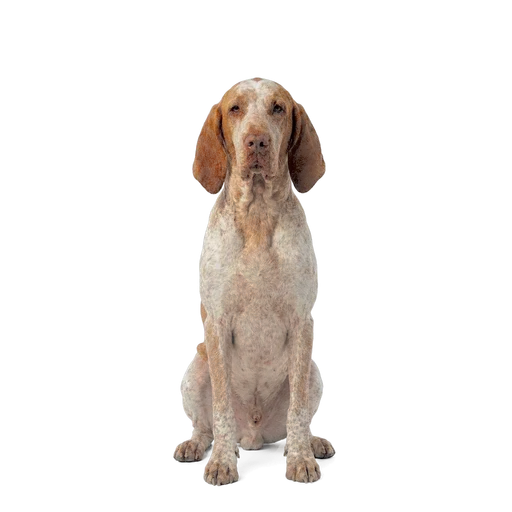
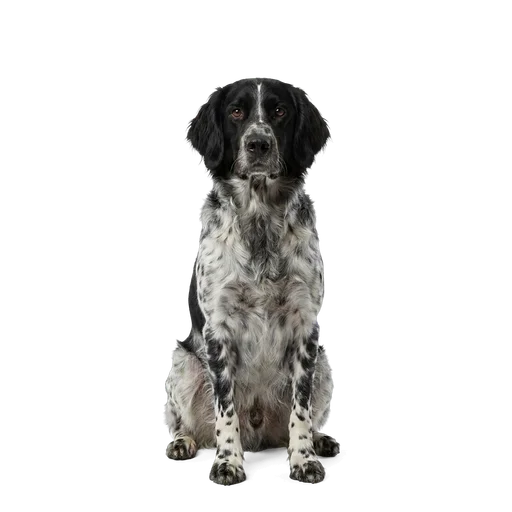
Deciding between similar breeds? Here is the Catahoula Leopard Dog next to Bracco Italiano and German Wirehaired Pointer.
| Catahoula Leopard Dog | Bracco Italiano | German Wirehaired Pointer | |
|---|---|---|---|
| Size | Large | Large | Large |
| Weight | 16-43 kg | 25-40 kg | 20-32 kg |
| Lifespan | 10-14 yrs | 12-13 yrs | 14-16 yrs |
| Activity | Active | Active | Active |
| Shedding | Medium | Medium | Medium |
| Good with kids | Yes | Yes | Yes |
| Apartment-friendly | No | No | No |
Frequently asked questions
Is a Catahoula Leopard Dog a good first dog?
No, and honest breeders will say so. The breed is independent, protective, physically powerful and bred to make its own decisions around dangerous livestock. It needs an owner who can provide firm, fair structure, real daily work and early socialization. A first time owner who underestimates that combination usually ends up with an unmanageable adolescent. Experienced, active, ideally rural or suburban homes with space are the right fit.
Can a Catahoula live in an apartment?
Realistically, no. This is a working breed that needs an hour or more of hard exercise daily plus mental work, and it is territorial and vocal about noises through walls. Without space and a job, Catahoulas become destructive and difficult. A securely fenced yard is close to essential, and the fence needs to be serious, since the breed can jump, climb and dig.
Why are so many Catahoulas deaf, and what is a BAER test?
Deafness in the breed is tied to the genetics behind the merle coat and white markings; the same pigment cells help build the inner ear. Merle to merle breedings raise the risk sharply, especially in mostly white puppies. A BAER test measures the brain's electrical response to sound and is the only reliable way to test a puppy's hearing in each ear. Ask any breeder whether the litter has been BAER tested before you commit.
Are Catahoulas aggressive?
They are protective and discerning rather than indiscriminately aggressive. A well raised Catahoula is watchful with strangers, devoted to its family and serious about its territory. Problems arise from poor socialization, no outlet for its drive or weak handling. Same sex dog aggression is a known breed tendency, so introductions to other dogs need care. With structure, work and early socialization, the breed is steady and reliable.
How much exercise does a Catahoula Leopard Dog need?
Plan on at least one hour of genuinely hard exercise every day, running, hiking, swimming or working stock, plus mental work such as training sessions, scent games or a dog sport. A leashed stroll around the block does not register as exercise for this breed. Young dogs under about eighteen months should avoid repetitive high impact work like distance jogging on pavement while their joints, including dysplasia prone hips, finish developing.
Related breeds

Health and care information is drawn from established veterinary sources and is general guidance, not veterinary advice. See our sources
Keep records for your Catahoula Leopard Dog
Vaccinations, food and treat safety, allergy alerts and parasite reminders - all tracked for your Catahoula Leopard Dog in the Pethls app.