

Origin: Netherlands
Dutch Shepherd
Get reminders for your Dutch Shepherd's vaccines
Vaccination and parasite reminders, food-safety scans and health records — free to start in the Pethls app.


Good for
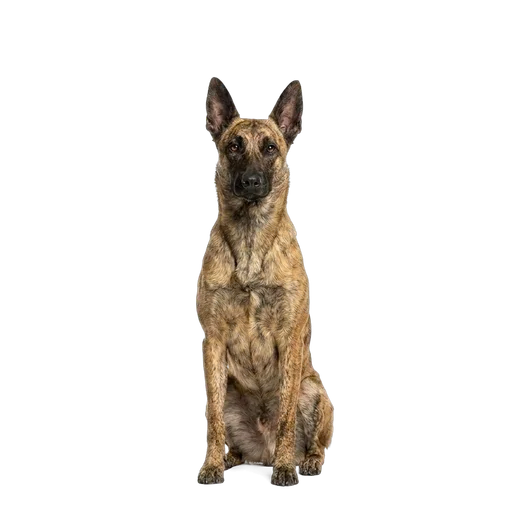
The Dutch Shepherd is the brindle-coated, all-purpose farm dog of the Netherlands, a rarer cousin of the Belgian Malinois that shares its athleticism while carrying a slightly cooler head. Farmers once expected one dog to herd sheep, pull carts, guard the yard and keep hens out of the vegetable patch, and that jack-of-all-trades heritage still shows. Adults weigh 23 to 34 kilograms and commonly live 12 to 15 years, a long span for a working breed. Loyal, sharp and endlessly trainable, the Dutch Shepherd needs a job and an experienced, active owner; it is not a dog for a quiet first-time home.
Temperament & personality
Ask handlers who work both breeds and you will hear the same comparison: the Dutch Shepherd has most of the Malinois engine with a bit more off switch. It is intense and driven in work, then noticeably more able to settle in the house afterward, provided the work actually happened. This balance made the breed a Dutch farm favorite for a century and keeps it in demand today with police units, search-and-rescue teams and dog-sport competitors who want drive without constant frenzy.
Loyalty runs deep. A Dutch Shepherd attaches strongly to its family, is typically good with children it lives with, and treats strangers with polite watchfulness rather than open suspicion. It generally coexists well with other dogs when socialized early, though small fleeing animals can flip the chase switch. The breed's intelligence cuts both ways: it learns routines, hand signals and door handles in days, and it learns bad habits just as fast if the household is inconsistent.
This is still a working dog, and the daily bill must be paid. Budget 90 minutes or more of exercise plus training: agility, obedience, herding, nosework, bikejoring, protection sport, the discipline matters less than the engagement. A Dutch Shepherd without a job becomes a barking, digging, fence-patrolling problem. First-time owners underestimate this breed because it looks manageable at 25 kilograms; the demands are in the brain, not the size.
Vaccination schedule
Dutch Shepherd puppies follow the core canine protocol. The DHPP combination vaccine against distemper, adenovirus, parvovirus and parainfluenza starts at six to eight weeks and is repeated every three to four weeks until at least 16 weeks of age. Expect three or four doses; the full series exists because maternal antibodies block earlier shots in some puppies, and only the final doses reliably immunize every individual.
Rabies is given once at 12 to 16 weeks depending on local requirements, boosted at one year, then repeated every one to three years alongside adult DHPP boosters per your vet's protocol and the licensed vaccine. Sport and working homes should keep vaccination paperwork current, since training clubs, trials and cross-border travel all require proof, and rabies dates are strictly enforced at EU borders.
Non-core vaccines depend on lifestyle. Leptospirosis coverage suits a breed that trains outdoors and drinks from puddles and ditches; Bordetella suits dogs in classes, competitions or boarding. For a puppy this social and this trainable, the goal is early socialization done safely: puppy classes that check vaccine records, carried outings and meetings with known healthy dogs until the series finishes.
Best food & diet
Feed to the workload. A sport or working Dutch Shepherd burns dramatically more than a companion of identical weight, and the difference can be a thousand calories a day. Choose a complete diet for active large breeds, roughly 24 to 30 percent protein with quality fat levels for hard-working dogs, and scale back sharply for quieter periods, injuries or off-season rest. This breed stays healthiest visibly lean, with the last ribs easy to feel and a clear waist from above.
Puppies should eat a large-breed growth formula with controlled calcium, because hip and elbow dysplasia both occur in the breed and rapid, heavy growth makes genetic joint problems worse. Keep growing dogs slim, skip forced running and repetitive jumping until the skeleton matures at 14 to 18 months, and let free play on varied ground build the muscle instead.
Split meals into two feeds daily and keep hard exercise an hour away from mealtimes; the Dutch Shepherd is less bloat-prone than giant deep-chested breeds, but the precaution costs nothing in an athletic dog that eats fast. Fresh water at all times, especially around training sessions. Treats used in training add up fast in this food-motivated breed, so subtract them from the daily ration or use part of the kibble allowance as rewards.
Common health problems
The Dutch Shepherd is a hard-wearing breed overall, helped by a small but health-conscious breeding community, and its 12 to 15 year lifespan reflects that. The orthopedic issues to know are hip and elbow dysplasia, inherited joint malformations that lead to arthritis. Rates are moderate, but the stakes are high in a dog expected to jump, sprint and climb for a living. Buy from breeders with official hip and elbow scores on both parents, and investigate any lameness, stiffness after rest or bunny-hopping gait in a young dog with X-rays early, when management options are widest.
Inflammatory myopathy is the breed-specific disease to ask breeders about. It is an inherited inflammatory condition of the muscles, appearing in young dogs, that causes progressive weakness, a stiff stilted gait, muscle wasting and difficulty swallowing in advanced cases. There is no cure, and affected dogs are managed rather than fixed, so the disease is a strong argument for buying from breeders who know their lines and use available genetic screening. A young Dutch Shepherd that tires abnormally fast or moves oddly needs a veterinary neurology workup, not more conditioning.
The eyes carry the other inherited concern: goniodysgenesis, a malformation of the eye's internal drainage angle that predisposes to primary glaucoma. Glaucoma is acutely painful and can destroy vision in a day; a red, cloudy, squinting or suddenly enlarged eye is an emergency, full stop. Gonioscopy screening exists and is recommended for breeding stock, so ask for eye certificates. Annual vet checks plus attention to gait and eyes cover this breed's realistic risks well.
Allergies & skin
The Dutch Shepherd is not hypoallergenic in any of its three coat types. Short-haired and long-haired dogs shed moderately year-round with two heavy seasonal molts; wire-haired dogs drop less hair into the environment but still produce the dander, saliva and skin proteins that trigger human allergies. Allergic households should spend unhurried time with adult dogs of the specific coat type before deciding.
Skin trouble is not a breed hallmark, and most Dutch Shepherds go through life with tough, weatherproof hides. When itching does appear, the usual suspects apply: flea allergy dermatitis, environmental atopy and, less often, food allergy. The pattern points to the cause; paw chewing, face rubbing and recurrent ear infections suggest atopy, while itching concentrated over the rump and tail base screams fleas. Persistent signs deserve a structured vet workup, including a proper elimination diet trial if food is on the list.
Care is straightforward. Year-round flea control eliminates the most common allergy trigger before it starts. Rinse chlorine or salt water off after swims and dry the coat, especially in wire-haired dogs where dampness lingers close to the skin. During molts, extra brushing removes dead undercoat that can otherwise mat against the skin and trap moisture. Any bald patches, sores or sudden coat change in a breed that normally maintains itself is a vet visit, not a shampoo experiment.
Flea, tick & worm prevention
A dog that trains in fields, woods and water needs year-round parasite cover. Isoxazoline chewables lasting one to three months are popular in sporting homes because swimming and rain cannot wash them off; monthly spot-ons work too if applied consistently. The brindle coat hides ticks well, so after outings in grass or forest, check by feel around the ears, neck, armpits, groin, tail base and between the toes.
European ticks carry Lyme disease, anaplasmosis, babesiosis and ehrlichiosis, and exposure scales with exactly the lifestyle this breed should be living. Carry a tick hook in the training bag and remove attached ticks immediately with a steady twist; transmission of most pathogens takes hours, so speed genuinely matters. Unexplained fever, lethargy or shifting-leg lameness in the weeks after tick exposure warrants a vet visit and a mention of the tick history.
Worming follows standard practice: puppies every two weeks from two weeks of age to 12 weeks, then monthly until six months, then treatment or faecal testing every three months for adults. Increase frequency for dogs that catch rodents or scavenge on walks. Lungworm, spread by slugs and snails, is worth flagging to your vet in affected regions, since a dog that plays with or eats slugs during outdoor training is a candidate for monthly prevention. In heartworm zones, a monthly preventive is essential and must be prescribed after testing.
Medications & dosing
Dose by measured weight, always. The breed spans 23 to 34 kilograms between a light female and a heavy male, enough spread to make label averages and guesswork genuinely risky. Weigh before any new prescription and keep the number current through adolescence, when a growing dog can outgrow its dose within weeks. Lean, muscular sport dogs also carry less fat than typical pets, which your vet may factor into dosing of certain drugs.
Nothing goes down this dog's throat without veterinary direction. Ibuprofen, naproxen and paracetamol from the human medicine cabinet cause ulcers, kidney damage and liver failure in dogs, sometimes at a single tablet's dose. Canine NSAIDs for joint disease, carprofen and meloxicam among them, are weight-dosed and monitored with periodic bloodwork during long-term use. If inflammatory myopathy is ever diagnosed, treatment revolves around weight-based immunosuppressive drugs, corticosteroids among them, with follow-up visits to fine-tune the dose against side effects. Glaucoma, if it strikes, is managed with pressure-lowering eye drops on a strict schedule where missed doses cost vision.
Two sporting-home habits worth building: keep a current weight, medication list and your 24-hour emergency clinic's number in your phone, and store all medications, including flavored chewable preventives, in a closed cupboard. A clever, athletic dog that can clear a counter in one hop will treat a month of tasty tablets as a jackpot, and that jackpot is a poisoning emergency.
Grooming & coat care
Grooming depends on which of the three coats your dog wears. The short-haired coat, the most common, needs a weekly rubdown with a rubber curry or bristle brush and little else. The long-haired coat wants brushing once or twice a week with a pin brush, plus attention to friction points behind the ears and in the trousers. The wire-haired coat needs a comb-through weekly and hand-stripping of the dead harsh coat roughly twice a year; clipping instead of stripping softens the texture and ruins the coat's weather resistance, so find a groomer who strips or learn the technique.
All three varieties blow undercoat in spring and autumn. For those two or three weeks, daily sessions with an undercoat rake keep the hair off the floor and out of the skin, and a bath with a thorough blow-dry mid-molt loosens the rest at once. Outside molting season, bathe only every two to three months or after genuinely dirty work; the coat is naturally weatherproof and over-washing strips the oils that make it so. Brindle coats show dust less than most, a small daily mercy.
Round out the routine with the basics an active dog needs: nails every three to four weeks even if road work wears them somewhat, weekly ear checks especially after swimming, teeth brushing several times a week and a quick post-training scan of paw pads for cuts, seeds and worn spots. Grooming time is also health-check time; hands moving over the whole dog weekly is how owners catch the lumps, ticks and sore muscles that eyes miss under a brindle coat.
How the Dutch Shepherd compares
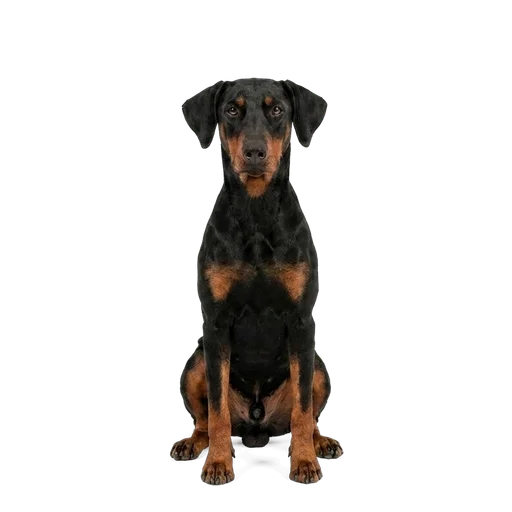
Deciding between similar breeds? Here is the Dutch Shepherd next to Doberman Pinscher and Giant Schnauzer.
| Dutch Shepherd | Doberman Pinscher | Giant Schnauzer | |
|---|---|---|---|
| Size | Large | Large | Large |
| Weight | 23-34 kg | 30-45 kg | 25-48 kg |
| Lifespan | 12-15 yrs | 10-13 yrs | 12-15 yrs |
| Activity | Active | Active | Active |
| Shedding | Medium | Medium | Low |
| Good with kids | Yes | Yes | Yes |
| Apartment-friendly | No | No | No |
Frequently asked questions
What is the difference between a Dutch Shepherd and a Belgian Malinois?
They are close cousins with similar builds and working ability. The Dutch Shepherd is always brindle, is rarer, and is generally described as slightly more level-headed, with a better off switch in the house after work is done. The Malinois tends to run hotter and more relentless. Both are demanding working breeds for experienced owners.
Are Dutch Shepherds good family dogs?
For active, experienced families, yes. The breed is loyal, typically good with children it lives with, and watchful rather than sharp with strangers. The condition is workload: 90 or more minutes of daily exercise plus training. An under-worked Dutch Shepherd becomes a barking, digging problem, so quiet or first-time homes are a poor match.
What is inflammatory myopathy in Dutch Shepherds?
It is an inherited inflammatory muscle disease specific to the breed, appearing in young dogs as progressive weakness, a stiff stilted gait and muscle wasting. There is no cure, so prevention happens at the breeding level. Buy from breeders who screen their lines, and have any young dog with unusual fatigue or gait changes examined promptly.
How much do Dutch Shepherds shed?
Moderately. Short-haired and long-haired dogs shed year-round with heavy spring and autumn molts; wire-haired dogs drop less hair but need hand-stripping about twice a year. Weekly brushing handles most of the year, stepping up to daily during molts. No coat variety is hypoallergenic, since dander and saliva cause allergies, not hair length.
How long do Dutch Shepherds live?
Typically 12 to 15 years, which is excellent for a working breed of this size. A relatively small, health-focused breeding population has kept the breed sound. The main things to screen for are hip and elbow dysplasia, inflammatory myopathy and goniodysgenesis, an eye condition that predisposes to glaucoma, so choose tested parents.
Related breeds

Health and care information is drawn from established veterinary sources and is general guidance, not veterinary advice. See our sources
Keep records for your Dutch Shepherd
Vaccinations, food and treat safety, allergy alerts and parasite reminders - all tracked for your Dutch Shepherd in the Pethls app.