

Origin: Finland
Finnish Spitz
Get reminders for your Finnish Spitz's vaccines
Vaccination and parasite reminders, food-safety scans and health records — free to start in the Pethls app.


Good for
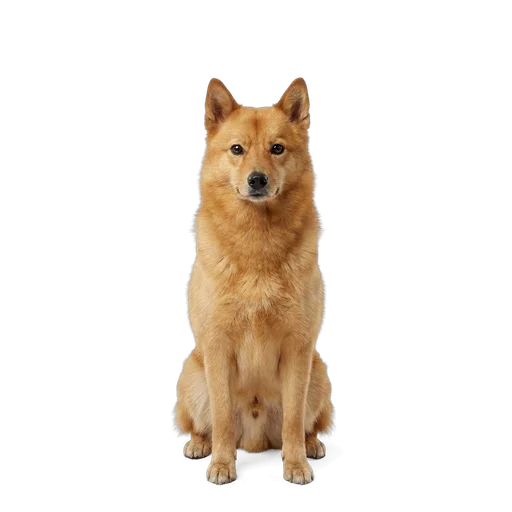
The Finnish Spitz is Finland's national dog, a fox-red hunter of 11 to 16 kg with pricked ears, a curled tail and a voice it is genuinely famous for. In its homeland it works as a bark pointer, ranging ahead to find grouse or capercaillie in a tree and then barking in a rapid yodel to hold the bird's attention until the hunter arrives; the best dogs compete in barking trials. At home that translates to a lively, alert, cheerfully independent companion that adores its family, plays wonderfully with children and announces absolutely everything. It is a hardy natural breed that commonly lives 13 to 15 years, but the dense red coat sheds heavily and the voice rules out noise-sensitive living situations.
Temperament & personality
Start with the sound, because it shapes everything. The Finnish Spitz was selected for generations to bark, loudly and persistently, as its actual job. A dog that could ring out over 160 barks a minute won trials in Finland. Your pet inherits that wiring, and it will comment on the doorbell, squirrels, delivery vans and interesting clouds. Training can channel it, teaching a quiet cue and rewarding calm pays off, but you cannot train the voice out of the breed, and neighbors on the other side of a thin wall will not thank you for trying.
Underneath the noise is a genuinely charming family dog. Finnish Spitz are affectionate without being clingy, playful well into old age, and famously patient with children; in Finland the breed has a long reputation as a household companion as much as a hunter. They are alert watchdogs but not guard dogs, all announcement and no aggression, and they tend to be friendly once introduced. Other dogs are usually fine, especially with early socialization, though males can posture with strange males. Cats raised alongside them generally coexist; the squirrel in the yard enjoys no such treaty.
Independence is the training challenge. A bark pointer works hundreds of meters from the hunter, deciding on its own where the birds are, so this is a smart dog that sees your requests as suggestions worth evaluating. Keep sessions short, rewards real and repetition low, because drilling bores them into stubbornness. Recall around wildlife is never fully trustworthy, which means a leash or fenced area outdoors. Give the breed a daily hour or more of genuine exercise, walks, hikes, games and something to think about, or it will invent a hobby, and its hobbies are vocal.
Vaccination schedule
Core vaccination for a Finnish Spitz puppy follows the standard canine protocol. DHPP, the combination shot covering distemper, adenovirus (hepatitis), parainfluenza and parvovirus, begins at six to eight weeks and repeats every three to four weeks until the puppy is at least 16 weeks old. The final dose in that series is the critical one, since antibodies from the mother can interfere with a puppy's response to earlier shots. Rabies is given once between 12 and 16 weeks, timed to local legal requirements.
Both DHPP and rabies are boosted at roughly one year. From then on DHPP typically moves to every three years, while rabies follows a one-year or three-year cycle depending on the vaccine used and your jurisdiction. Leptospirosis is now recommended for every dog, so plan on it alongside the core shots: a two-dose puppy series followed by an annual booster, which sits apart from the every-three-years DHPP schedule. For a dog bred to run through forest and field, access to ponds, puddles and wildlife only raises the exposure risk and makes that yearly booster matter more. Beyond that, non-core vaccines deserve a real conversation with your vet: Lyme disease in tick-heavy regions, and Bordetella if the dog boards, shows or visits daycare.
The breed's 13 to 15 year lifespan means well over a decade of boosters to track. Enter each vaccine in a health log with its due date and let the reminders do the remembering, particularly for the three-year cycles that are easy to lose track of.
Best food & diet
At 11 to 16 kg the Finnish Spitz is a straightforward medium-sized dog to feed. A quality commercial food for medium breeds, with animal protein leading the ingredient list, covers an active adult well. Puppies do fine on a standard puppy formula; this breed matures without the growth complications of the giants, though keeping puppies lean still protects the hips and knees the breed can have trouble with.
Watch the waistline, because this is an efficient eater. The breed evolved in a cold climate on lean rations, and modern pet portions plus modern pet exercise levels produce chubby Finkies with surprising speed. Extra weight loads the kneecaps of a breed prone to patellar luxation and hides early signs of hip trouble. Feed measured meals twice a day rather than free-feeding, count training treats against the daily total, and aim for a visible waist and easily felt ribs.
Two breed-specific notes. First, that magnificent red coat reflects diet quality; a food with adequate omega-3 fatty acids (fish oil, or another EPA and DHA source if your dog is one of the fish-sensitive Finkies) supports coat gloss and skin health through the heavy shedding seasons. Second, dogs on anti-seizure medication, relevant in a breed carrying some epilepsy, should have diet changes cleared with the vet first, since consistent feeding helps keep drug levels stable.
Common health problems
This is a hardy natural breed shaped more by working selection than by show fashion, and many Finnish Spitz sail through 13 to 15 years with little more than routine care. The health issues that do circulate in the breed are worth knowing precisely because an owner who spots them early has excellent options.
Two of the breed's three main concerns are orthopedic. Hip dysplasia occurs at modest rates; look for stiffness after rest, a rolling or bunny-hopping gait, and reluctance to jump, and buy puppies only from hip-scored parents. Patellar luxation, a kneecap that slips out of its groove, is the more characteristic problem for a medium spitz. The classic sign is a skipping stride, the dog carries a back leg for a few steps, then trots on normally as the kneecap pops back. Mild cases need only weight control and muscle-building exercise; severe ones are corrected surgically.
Epilepsy is the condition owners most need to recognize. Seizures usually begin between one and five years of age: collapse, paddling limbs, drooling and disorientation lasting seconds to a couple of minutes. A single seizure warrants a vet visit and bloodwork; recurring seizures are typically managed with daily medication such as phenobarbital or levetiracetam, and most epileptic dogs live full lives on treatment. Film any episode on your phone, note the time and duration in a health log, and never reach into a seizing dog's mouth. Ask breeders directly about seizure history in the line, since there is no DNA test.
Allergies & skin
The Finnish Spitz is not hypoallergenic, and the dense double coat that sheds in serious volume twice a year spreads dander generously around the home. Allergic households should spend real time with the breed before committing, ideally during a coat-blowing season, because that is the situation they would live with.
The dog's own skin is generally sound. This is a breed without exaggerated folds or coat problems, and skin complaints are less common than in many popular breeds. When itching does occur, the usual suspects apply: flea allergy dermatitis first (a single flea bite can set off days of scratching in a sensitized dog), then environmental allergies to pollens and dust mites, then food allergy, which is the least common and shows up as year-round itching, often with ear or stomach involvement.
The practical challenge is seeing problems through the coat. A thick double coat hides hot spots, flea dirt and redness until they are advanced, so make skin checks part of your brushing routine, parting the coat to the skin at the neck, rump and belly. During seasonal shedding, undercoat that fails to release can mat against the skin and trap moisture, so thorough raking during coat blow is skin care as much as housekeeping. Persistent scratching, chewing at the paws or repeated ear infections deserve a vet workup rather than a medicated shampoo bought on guesswork.
Flea, tick & worm prevention
A hunting spitz that ranges through forest, brush and long grass collects ticks as an occupational hazard. Year-round prevention with a vet-recommended flea and tick product, an oral isoxazoline chew or an effective spot-on, is the foundation, and in tick-dense regions it is genuinely non-negotiable given the diseases ticks carry. After woodland outings, run your hands through the coat against the grain and check the ears, armpits, groin and between the toes, because the dense red coat gives ticks excellent cover on their way to the skin.
Fleas are less dramatic but more persistent. The double coat hides an infestation until scratching starts, so watch for flea dirt, black specks that turn rust-red on a wet paper towel, when you groom. Treat every pet in the household at once if fleas appear, and remember that most of the flea population lives in bedding and carpets, not on the dog.
Worming runs on the standard schedule: puppies every two weeks from two weeks of age until 12 weeks, then monthly until six months, then an adult routine your vet tailors to lifestyle. A dog that hunts, scavenges or eats prey needs tapeworm coverage on top of routine roundworm and hookworm treatment, and monthly heartworm prevention applies wherever heartworm exists. An annual fecal test closes the loop. All products are dosed by weight, so keep an up-to-date figure between 11 and 16 kg on file rather than guessing from memory.
Medications & dosing
Every drug your Finnish Spitz takes, from a monthly flea chew to post-surgical pain relief, is dosed by body weight. At 11 to 16 kg the breed sits near the boundary between the small-medium and medium-large bands of many parasite products, so an actual scale reading matters; a dog assumed to be 12 kg but really 16 kg is underdosed by a quarter. Weigh the dog at vet visits, record it in a health log, and check the label band every time you buy.
Never improvise with human medications. Ibuprofen and paracetamol cause ulcers, kidney damage and liver failure in dogs at doses that sound trivially small for a 14 kg animal. Pain, allergies and stomach upsets should all route through the vet, who can prescribe canine drugs at proper mg-per-kg rates.
Epilepsy management deserves its own paragraph for this breed. Dogs on phenobarbital, potassium bromide or levetiracetam need doses given on time every day, since missed doses can trigger breakthrough seizures, and periodic blood tests to confirm drug levels and monitor the liver. Set recurring medication reminders in a health log, log every seizure with date and length, and never stop an anti-seizure drug abruptly. Bring the seizure log to each appointment; dose adjustments are made on exactly that record.
Grooming & coat care
The Finnish Spitz wears a classic Nordic double coat: a harsh, straight outer layer in that glowing fox-red over a pale, dense undercoat that provides the insulation. Week to week it is an easy coat, naturally clean, nearly odorless and dirt-shedding, needing only a solid brushing once or twice a week with a slicker brush and a metal comb to the skin.
Then comes coat blow. Once or twice a year, typically spring and autumn, the undercoat releases in handfuls and the shedding rating earns its number. For two to four weeks, daily sessions with an undercoat rake are the difference between hair managed in the garden and hair drifting through the house like red snow. Warm baths followed by thorough blow-drying speed the process by loosening dead undercoat. Females often blow coat after seasons as well.
Two rules protect the coat. Never shave a double-coated spitz; the coat insulates against heat as well as cold, and shaving can permanently damage regrowth while removing the dog's sun protection. And bathe sparingly, every couple of months or when actually dirty, since the coat's natural texture repels grime and over-washing strips it. Round out the routine with nail trims every three to four weeks, weekly ear checks under those pricked ears, which stay healthier than drop ears but still collect debris, and tooth brushing several times a week to protect a mouth that has 13 to 15 years of chewing ahead of it.
How the Finnish Spitz compares
Deciding between similar breeds? Here is the Finnish Spitz next to Pumi and American Eskimo Dog.
| Finnish Spitz | Pumi | American Eskimo Dog | |
|---|---|---|---|
| Size | Medium | Medium | Medium |
| Weight | 11-16 kg | 8-15 kg | 4.5-16 kg |
| Lifespan | 13-15 yrs | 12-13 yrs | 13-15 yrs |
| Activity | Active | Active | Active |
| Shedding | High | Low | High |
| Good with kids | Yes | Yes | Yes |
| Apartment-friendly | No | No | Yes |
Frequently asked questions
Do Finnish Spitz really bark a lot?
Yes, and it is by design. The breed hunts as a bark pointer, holding treed birds with rapid, sustained barking, and Finland runs barking competitions for them. Training a quiet cue helps at home, but a mostly silent Finnish Spitz is not a realistic expectation, so the breed suits detached homes better than thin-walled apartments.
Are Finnish Spitz good with children?
Very good. The breed has a long history in Finland as a family companion and is known for being playful, sturdy and patient with kids. As always, supervise young children and teach respectful handling, but child-friendliness is one of the breed's genuine strengths.
How much do Finnish Spitz shed?
Heavily. The dense double coat sheds moderately year-round and blows out dramatically once or twice a year, when daily raking is needed for a few weeks. Between coat blows, brushing once or twice a week keeps it manageable. The breed is not hypoallergenic.
Are Finnish Spitz easy to train?
They are clever but independent. Bred to hunt far from the handler and make their own decisions, they learn fast and bore faster, so short, rewarding, varied sessions work best. Recall around squirrels and birds is never fully reliable, which means leashes or fences outdoors.
What health problems affect Finnish Spitz?
It is a hardy natural breed overall, often living 13 to 15 years. The known concerns are hip dysplasia, patellar luxation (a slipping kneecap that causes a skipping gait) and epilepsy, which usually appears between one and five years and is manageable with daily medication. Buy from breeders who screen hips and knees and are open about seizure history.
Related breeds


Health and care information is drawn from established veterinary sources and is general guidance, not veterinary advice. See our sources
Keep records for your Finnish Spitz
Vaccinations, food and treat safety, allergy alerts and parasite reminders - all tracked for your Finnish Spitz in the Pethls app.