

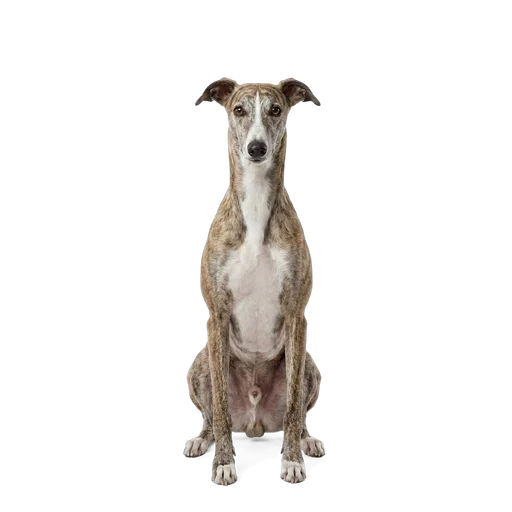
Origin: United Kingdom
Greyhound
Get reminders for your Greyhound's vaccines
Vaccination and parasite reminders, food-safety scans and health records — free to start in the Pethls app.


Good for
People call the Greyhound the 45 mph couch potato, and the nickname is earned. This tall, elegant British sighthound is the fastest dog breed on the planet, yet it spends most of the day dozing in a soft heap. Greyhounds are gentle, quiet, and deeply affectionate, with an easygoing nature that surprises anyone expecting a hyperactive racer. Retired racing and coursing dogs adopt beautifully into homes, including apartments. Give one a warm bed, a couple of short sprints, and steady company, and you have a calm, devoted housemate.
Temperament & personality
Greyhounds are famously calm and low-key indoors. They lounge for the better part of the day, ask for little, and lean into their people with quiet affection. Barking is rare, and their gentle manner makes them lovely around children and, usually, other dogs.
That serenity coexists with a strong prey drive bred over centuries. A Greyhound at full stretch is astonishingly fast, and a small running animal can trigger an instant chase. Keep them leashed in open areas and only allow off-leash running inside secure, high fencing, since even a well-trained Greyhound may not recall mid-chase.
Many Greyhounds in homes are retired racers, and they often arrive knowing little about stairs, glass doors, or being alone. They are sensitive dogs that thrive on routine and calm handling. With patience they settle quickly, and their gratitude and gentleness win most owners over fast. They suit first-time owners who can offer a quiet, steady home.
Vaccination schedule
Greyhound puppies get the core DHPP combination vaccine, which covers distemper, hepatitis/adenovirus, parvovirus, and parainfluenza. The series usually begins at six to eight weeks and repeats every three to four weeks until roughly sixteen weeks old. Completing the whole course is what builds reliable protection, especially against parvovirus.
Rabies is a separate vaccine, and requirements vary widely by country: it is routine for pet dogs in some regions, such as the United States, but in the UK it is typically given only for travel. Where it is given, the first dose usually falls around twelve to sixteen weeks. A booster typically follows at about one year of age, after which your vet moves to a one-year or three-year interval based on the vaccine used and local law.
Adopting an adult or retired racing Greyhound is common, and these dogs often already have vaccination records from the kennel. Ask for that paperwork, then have your vet review it and catch up on anything missing. Leptospirosis is now a core vaccine recommended for every dog, so plan on it regardless of lifestyle; dogs with water, rural, or wildlife exposure face higher risk, which is one reason the annual booster matters. Non-core vaccines such as kennel cough and canine influenza depend on how social your dog's life will be. Confirm the right plan with your vet.
Best food & diet
Greyhounds are large but lean, and a healthy one shows a visible waist and a hint of rib. Feed a quality diet built around real animal protein to support their light muscle. Retired racers sometimes arrive underweight and need gradual building back up, so track body condition rather than fixating on the number on the scale.
Like many deep-chested, large breeds, Greyhounds can occasionally develop bloat and gastric dilatation-volvulus (GDV), a life-threatening emergency where the stomach fills with gas and can twist. To lower the risk, feed two or more smaller meals a day instead of one big one, use a raised or slow-feeder bowl if your dog gulps, and avoid vigorous exercise for about an hour before and after eating.
Beef and chicken are common allergens, so if your Greyhound develops itchy skin or digestive upset, a limited-ingredient or novel-protein diet can help you find the culprit. Learn the warning signs of bloat - a swollen belly, unproductive retching, restlessness - and treat them as a same-hour emergency.
Common health problems
The single most important Greyhound health fact for any owner is anesthesia sensitivity. This breed has very low body fat, limited hepatic clearance of some drugs, and a well-documented sensitivity to thiobarbiturate anesthetics such as thiopental, so standard doses can be dangerous. Always tell every vet, out loud and in writing, that your dog is a Greyhound before any sedation, dental, or surgery. Vets experienced with the breed adjust drugs and protocols accordingly.
Osteosarcoma, an aggressive bone cancer, often shows first as a limp or a swelling on a leg. Do not dismiss persistent lameness in an adult or older Greyhound; have it x-rayed promptly. They are also prone to bloat/GDV, covered in the diet section, which is a true emergency.
Like many dogs, Greyhounds sometimes run into dental disease, which proactive tooth care can catch early, along with pressure sores and corns on the feet. Corns are hard, painful growths on the paw pads that can make a dog limp, so check the feet regularly. Soft bedding helps guard against pressure sores over bony elbows and hips.
Allergies & skin
With a thin, short coat and little insulating fat, Greyhounds show skin trouble readily. Environmental allergens such as grass pollen and dust mites often cause itchy paws, ears, and belly, and these signs frequently flare with the seasons as pollen levels rise.
Food allergies to proteins like beef and chicken can drive similar itching plus loose stools. Because environmental and dietary causes look alike, a structured plan with your vet beats trial and error. Rinsing your dog's legs and belly after grassy walks and washing bedding often reduces exposure.
With a fine coat and prominent bony points, Greyhounds can run into pressure sores and skin abrasions, so stay alert for them. Provide thick, supportive bedding, keep nails trimmed, and check the feet regularly for the hard, painful corns that can develop. Any limping tied to a paw lump deserves a vet visit.
Flea, tick & worm prevention
Fleas and ticks are a year-round concern, and the Greyhound's short coat makes it easier to spot a tick during a post-walk check. Use a preventive matched to your area, whether a monthly chew, a spot-on treatment, or a treated collar. Ticks transmit serious diseases, so remove any you find promptly and completely.
Worming targets intestinal parasites, roundworms, hookworms, tapeworms, and whipworms, along with heartworm where it is a risk. Retired racing Greyhounds sometimes come from kennels carrying parasites, so a faecal test and a proper worming course early on are wise. Adults then follow a routine your vet sets, often every three months.
Dose all parasite products by current body weight. Greyhounds are large dogs, so make sure you are using the correct large-breed weight band, and reweigh if your dog gains or loses condition. If you see scooting, a dull coat, or anything unusual in the stool, ask your vet for a faecal check.
Medications & dosing
Every medication for a Greyhound must be dosed by current body weight and directed by your vet, and this breed needs extra caution. Greyhounds metabolize some drugs more slowly, which is the reason for their well-known sensitivity to barbiturate anesthetics and certain sedatives (explained in the health section). Weigh your dog before dosing anything.
Make it a standing rule to tell every vet and every clinic that your dog is a Greyhound, particularly before any procedure that involves sedation or general anesthesia. A vet unfamiliar with the breed may reach for a standard protocol that is unsafe here. Do not give human painkillers like ibuprofen or paracetamol, which are toxic to dogs.
Keep a written log of medications, doses, and dates, and finish any prescribed course completely even once your dog looks better. Watch for reactions such as vomiting, unsteadiness, or prolonged drowsiness after any drug, and contact your vet immediately if you see them.
Grooming & coat care
Greyhounds are wonderfully easy to groom. The short, smooth, single coat sheds lightly and needs only a weekly once-over with a rubber mitt or soft brush to stay sleek. Full baths are seldom necessary, and the coat carries little doggy odor.
Warmth is the real priority. A Greyhound has minimal body fat and a thin coat, so it chills fast and will shiver on cold days. A well-fitted padded or fleece coat for winter walks is a practical necessity, and many owners provide a jumper or blanket indoors during cold spells.
Complete the routine with regular nail trims, ear checks, and frequent tooth brushing to help guard against dental disease. While grooming, run your hands over the feet to catch corns early and inspect bony pressure points for sores, then make sure the bed is thick enough to protect them.
How the Greyhound compares
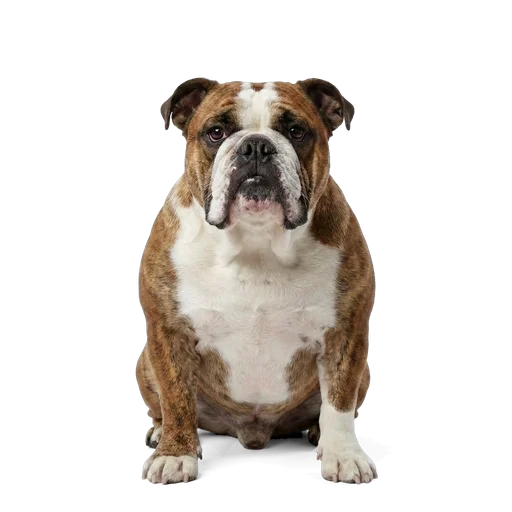
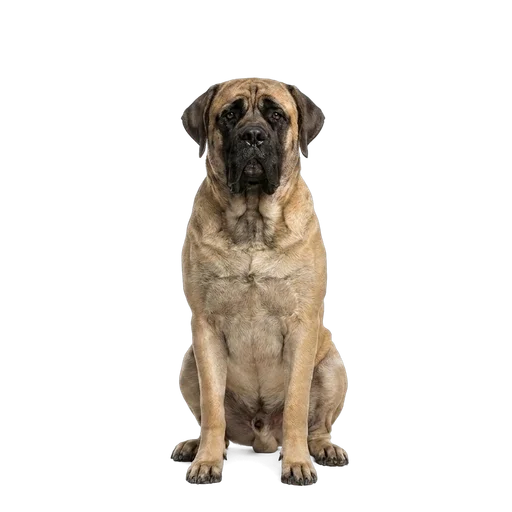
Deciding between similar breeds? Here is the Greyhound next to English Bulldog and English Mastiff.
| Greyhound | English Bulldog | English Mastiff | |
|---|---|---|---|
| Size | Large | Medium | Large |
| Weight | 27-40 kg | 18-25 kg | 54-100 kg |
| Lifespan | 10-14 yrs | 8-10 yrs | 6-12 yrs |
| Activity | Calm | Calm | Calm |
| Shedding | Low | Medium | Medium |
| Good with kids | Yes | Yes | Yes |
| Apartment-friendly | Yes | Yes | No |
Frequently asked questions
Do Greyhounds really only need a little exercise?
Yes. Despite being the fastest dog breed, Greyhounds are sprinters and sleepers, not endurance athletes. A couple of walks plus a short chance to run flat-out satisfies most of them, and they spend the rest of the day happily lounging. This is why the 45 mph couch potato nickname sticks.
Are retired racing Greyhounds good pets?
They make excellent pets. Retired racers are typically gentle, calm, and affectionate, and they settle into home life quickly with a little patience. Many need to learn everyday things like stairs and glass doors, but their easygoing nature suits families and even first-time owners.
Why is anesthesia risky for Greyhounds?
Greyhounds have very low body fat and a known sensitivity to barbiturate anesthetics, so standard drug doses can be dangerous. Always tell your vet the breed before any sedation, dental cleaning, or surgery so they can adjust the drugs and protocol for a sighthound.
What is bloat and why should Greyhound owners worry about it?
Bloat, or GDV, is when the stomach fills with gas and can twist, and it is a life-threatening emergency in deep-chested breeds like the Greyhound. Feed smaller meals, avoid hard exercise around mealtimes, and treat a swollen belly with unproductive retching as a same-hour emergency.
What are corns on a Greyhound's feet?
Corns are hard, painful growths on the paw pads that may develop in Greyhounds and cause limping. Check the feet regularly, use soft bedding, and see your vet if your dog goes lame with a lump on a pad, since corns are treatable but tend to recur.
Related breeds
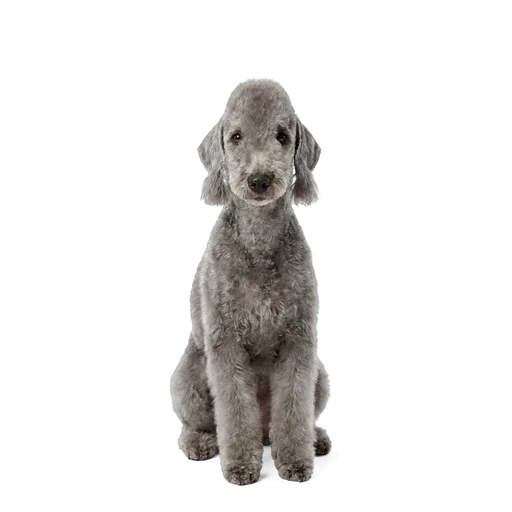
Health and care information is drawn from established veterinary sources and is general guidance, not veterinary advice. See our sources
Keep records for your Greyhound
Vaccinations, food and treat safety, allergy alerts and parasite reminders - all tracked for your Greyhound in the Pethls app.