

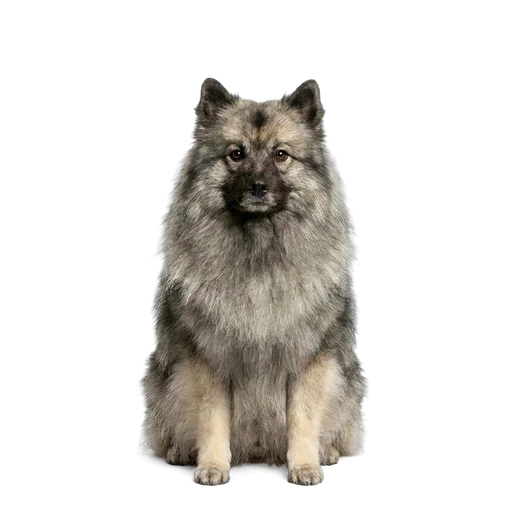
Origin: Netherlands
Keeshond
Get reminders for your Keeshond's vaccines
Vaccination and parasite reminders, food-safety scans and health records — free to start in the Pethls app.


Good for
The Keeshond is traditionally tied to Dutch riverboats and canal barges, where it kept watch and kept company, and that companion-watchdog character still defines the breed. This medium spitz weighs 16 to 20 kg, lives 12 to 15 years, and wears two trademarks: a spectacular silver-and-black double coat and the dark 'spectacles' markings around the eyes that give it a permanently smiling, bespectacled expression. Temperament is the selling point: few breeds are this openly friendly, this attached to their people, or this good with children. The bills come due in two currencies, hair and noise. The coat blows out spectacularly twice a year, and a bored Keeshond will narrate the neighborhood. Budget for both and you get one of the best family and apartment companions in dogdom.
Temperament & personality
The Keeshond is sometimes called the smiling Dutchman, and the nickname is accurate on both counts. This is a dog that grins, spins in circles when you come home, and genuinely believes every family activity requires its presence. Kept as a companion and watchdog rather than a hunter or fighter, the Kees has almost no prey drive, no guarding sharpness, and no interest in working away from people. Its role, historically and now, is being with you, and it takes that to the point of following you into the bathroom.
With children, the breed is a standout. Keeshonden are sturdy enough for play, patient with handling, and soft-mouthed and forgiving in a way that has made them a traditional family dog in the Netherlands for two centuries. They typically get along well with other dogs and coexist peacefully with cats, especially when raised together. This sociability has a flip side: a Keeshond left alone for long workdays becomes anxious and loud. This is a poor breed choice for an empty house.
Now, the noise. Keeshonden were kept as watchdogs, and modern ones still announce visitors, delivery vans, squirrels, and interesting weather. They are not aggressive barkers, just enthusiastic broadcasters. Early training with a 'quiet' cue and plenty of mental work keeps it manageable, and apartment life works well provided you commit to that training. Exercise needs are moderate: a couple of good walks, some play, and a training game or puzzle daily satisfy most adults. They are clever, sensitive, and eager to please, which makes them forgiving of beginner training mistakes; harshness, on the other hand, wilts them.
Vaccination schedule
Keeshond puppies follow the standard core schedule: the DHPP combination vaccine (distemper, hepatitis or adenovirus, parainfluenza, parvovirus) starting at 6 to 8 weeks and repeating every 3 to 4 weeks until 16 weeks of age. The final dose at or after 16 weeks is the one that must not slip, because maternal antibodies can neutralize earlier doses. A one-year booster follows, then revaccination every 1 to 3 years per your vet's protocol and titer preferences.
Rabies is given at 12 to 16 weeks, boosted at one year, then every 1 to 3 years as local law and the licensed vaccine dictate. Since Keeshonden are social dogs whose owners tend to use daycare, group classes, and boarding, the non-core Bordetella and canine influenza vaccines usually earn their place. Leptospirosis is now recommended as a core vaccine for all dogs, given as a 2-dose puppy series and then an annual booster, rather than the every-1-to-3-year schedule of the DHPP core; walking near water or in areas with wildlife raises the exposure risk and is a good reason to keep that annual booster on time. Confirm the plan with your vet.
Two practical notes for this breed. The plush coat makes injection-site lumps easy to miss, so give the vaccination spot a gentle feel a few days after each visit and mention anything persistent to your vet. And because a Keeshond's thick coat can hide early weight gain, use vaccine visits as scheduled weigh-ins; the scale catches what your hands and eyes will not. A reminder on your phone keeps the puppy series and the adult boosters from slipping through the cracks.
Best food & diet
A 16 to 20 kg adult Keeshond with moderate exercise typically needs about 900 to 1,300 kcal per day of a complete medium-breed diet, split into two meals. Choose a food with named animal protein first and a moderate fat level. Puppies do well on a standard medium-breed puppy formula until around 12 months; no special growth management is needed at this size, just avoid overfeeding a chunky adolescent.
Weight is the quiet battle with this breed. Keeshonden are enthusiastic eaters, talented beggars (the smile is a weapon), and their profuse coat hides expanding waistlines until the problem is well established. Obesity matters more here than in the average dog because the breed carries elevated risk of diabetes mellitus and hip dysplasia, and excess weight feeds both. Do a hands-on rib check weekly; you should feel ribs under a padding of coat with light pressure. Measure meals with a scale or proper cup, and cut the daily ration by the calories of any training treats.
Coat and skin get real support from diet. Omega-3 fatty acids (fish oil dosed by your vet) noticeably improve coat quality in double-coated breeds and help during the twice-yearly coat blow. Steady hydration also helps in middle age, when bladder stones can turn up as a sign of the breed's parathyroid disease. For dogs diagnosed with diabetes, your vet will move to a consistent, scheduled feeding routine matched to insulin timing, which is far easier to implement if the dog has never been a grazer, so establish set mealtimes from puppyhood.
Common health problems
The condition every Keeshond owner should know by name is primary hyperparathyroidism, because this breed essentially owns it. A small benign tumor of the parathyroid gland pumps out excess hormone, driving blood calcium up; the signs are frustratingly vague (drinking more, urinating more, weakness, bladder stones) and usually appear in dogs over 7. The breed-specific part: Keeshonden have an inherited form, a DNA test exists to identify carriers of the gene, and surgery to remove the affected gland is usually curative. Ask your breeder about PHPT testing, and from middle age onward make sure annual bloodwork includes calcium. An elevated calcium result in an older Keeshond should always prompt the follow-up question.
Epilepsy is the second inherited concern. Seizures typically start between six months and five years, and while watching one is frightening, most epileptic Keeshonden live full lives on affordable daily medication. Film any seizure if you can, note the time and duration, and get a vet appointment promptly; a single short seizure is urgent but not an emergency, while a seizure over five minutes or clusters in one day mean emergency care now.
Hip dysplasia occurs in the breed, so buy from breeders with hip scores on both parents and keep your dog lean for life; at 16 to 20 kg, well-managed hips rarely need surgery. Diabetes mellitus rounds out the metabolic risks, typically appearing in middle-aged and older dogs, with thirst, hunger, and weight loss despite eating as the classic triad. It is very manageable with insulin and routine.
One more item for the checklist: congenital heart defects, particularly patent ductus arteriosus (PDA), turn up occasionally in the breed. A PDA is usually caught as a loud murmur at the first puppy visits and is surgically correctable with excellent outcomes when found early, which is one solid reason never to skip those early vet checks. With sensible breeding and weight control, the breed's 12 to 15 year lifespan is a realistic expectation.
Allergies & skin
No, the Keeshond is not hypoallergenic, not even close. That glorious double coat sheds moderately all year and catastrophically twice a year, distributing dander-coated hair throughout the home. Allergic households should think hard before choosing this breed, and a good vacuum is part of the purchase price.
The dog's own skin is generally sound, but the coat creates two care problems. First, anything can hide under it: hot spots, ticks, wounds, and lumps all go unseen unless you physically part the coat, so make a weekly hands-on skin check part of grooming. Hot spots particularly love the dense areas behind the ears and under the ruff, especially if the undercoat stays damp after swimming or a bath. Dry a wet Keeshond thoroughly, all the way to the skin.
Second, never shave this breed, even with good intentions about summer heat or shedding. The double coat insulates against heat, and shaving can trigger post-clipping alopecia in spitz breeds, where the coat regrows patchy, woolly, or sometimes barely at all. Shade, water, and a thorough undercoat rake-out are the correct summer plan. Environmental and flea allergies do occur and present the usual way (paw licking, ear infections, belly redness); with this much coat, flare-ups get discovered late, so persistent scratching always deserves a part-the-fur inspection and, if it continues, a vet visit. A sudden coat change, thinning, dullness, or symmetrical hair loss without itching, can also signal hormonal disease in this breed and belongs in front of a vet, not a groomer.
Flea, tick & worm prevention
Finding a flea on a Keeshond by eye is nearly impossible; there are several centimeters of dense undercoat between you and the skin. That coat also keeps spot-on treatments from spreading properly unless you part the hair down to skin at several points along the neck and back. Many Keeshond owners land on oral isoxazoline chews (given monthly or every 12 weeks depending on the product) precisely because coat density becomes irrelevant. Whichever route you choose, run it year-round; central heating keeps flea life cycles turning all winter, and the coat gives an established infestation weeks of cover.
Ticks exploit the same cover. After woodland or long-grass walks, work your fingers to the skin around the ears, ruff, armpits, and tail base, the spots ticks favor and coats hide best. In tick-endemic regions, pairing a preventive with the habit of hands-on checks is the realistic standard, and your vet may raise the Lyme vaccine if you are in a high-risk area.
Worming is standard: puppies every 2 to 3 weeks until 12 weeks, then monthly to 6 months, then typically quarterly for adults or as annual fecal tests dictate. Monthly heartworm prevention applies wherever heartworm exists, year-round in most of the US. All doses are weight-based, so keep your dog's weight current, particularly since a fluffy Keeshond can quietly put on a couple of kilos above its normal 16 to 20 kg without anyone noticing until the preventive band no longer fits. Recurring reminders on your phone cover the rest.
Medications & dosing
Everything your Keeshond will ever be prescribed is dosed on body weight, and this breed makes accurate weighing genuinely important for a sneaky reason: the coat. Owners consistently misjudge a Keeshond's condition by eye, and a dog assumed to be 18 kg may actually be carrying an extra few kilos, enough to matter for anesthesia, seizure medication, and insulin alike. Weigh on a real scale at least twice a year and before any new prescription.
The breed's health profile means some Keeshonden end up on serious long-term medication, and precision matters for all of it. Epileptic dogs on phenobarbital or similar drugs need doses timed consistently (set phone alarms; a late dose can mean a breakthrough seizure) plus periodic blood tests for drug levels and liver health. Diabetic dogs need insulin matched exactly to scheduled meals, and units measured with the correct syringe for the insulin type. Dogs treated for hyperparathyroidism need calcium monitoring around and after surgery. None of this is difficult, but all of it rewards routine, and repeating reminders on your phone work well for exactly this kind of schedule.
The safety rules are the same as for every dog, but worth stating plainly: no human medications without explicit veterinary approval (ibuprofen, naproxen, and acetaminophen are all dangerous to dogs), no adjusting seizure or insulin doses yourself based on one good or bad day, and no stopping a course early because the dog seems fine. If a dose is missed, call the clinic rather than doubling up. Keep the current medication list, doses, and last weight in a written record you can grab quickly; in an emergency, especially a seizure presentation, that information changes what the ER vet does in the first five minutes.
Grooming & coat care
The Keeshond coat looks like an enormous commitment, and it is, but not quite the way people expect. The harsh outer coat resists dirt and mats less than softer breeds' fur, and a Kees that gets proper brushing rarely tangles badly. The real work is volume: a thorough line-brushing session with a pin brush and an undercoat rake, working layer by layer down to the skin, takes 30 to 60 minutes and needs doing at least twice a week. Surface-brushing the top and calling it done is the classic mistake; it leaves the undercoat packing into felt near the skin while the outside looks fine.
Twice a year, usually spring and fall, the Keeshond blows coat, and the undercoat comes out in handfuls, tufts, and drifting clouds for two to four weeks. During a blow, daily raking sessions and a couple of warm baths followed by high-velocity drying will strip out the dead undercoat dramatically faster than brushing alone. Females may also blow coat after seasons. There is no negotiating with this process; you can only accelerate it. Outside blow season, shedding runs steady and moderate, and hair on your clothes is simply part of Keeshond ownership.
Bathe every 6 to 8 weeks, or more often during coat blows, and dry all the way to the skin every single time, because trapped dampness in that undercoat brews hot spots. Never shave (see the skin section; post-clipping alopecia is real in spitz breeds), and skip trimming beyond tidying the feet and hocks; the coat's natural shape is correct. Finish the routine with nail trims every 2 to 3 weeks, weekly ear checks under the ruff, and regular tooth brushing. Most Keeshonden, raised with grooming from puppyhood, treat the whole production as extended petting, which, for this breed, was rather the point all along.
How the Keeshond compares
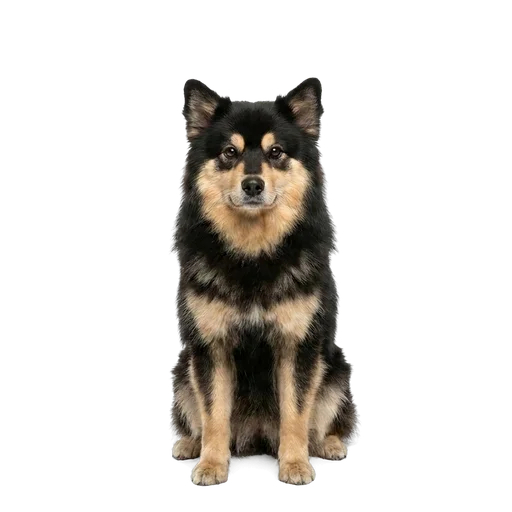
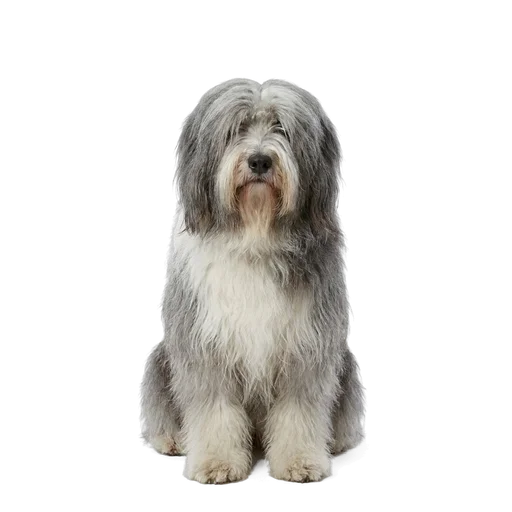
Deciding between similar breeds? Here is the Keeshond next to Finnish Lapphund and Polish Lowland Sheepdog.
| Keeshond | Finnish Lapphund | Polish Lowland Sheepdog | |
|---|---|---|---|
| Size | Medium | Medium | Medium |
| Weight | 16-20 kg | 15-24 kg | 14-23 kg |
| Lifespan | 12-15 yrs | 12-15 yrs | 12-14 yrs |
| Activity | Moderate | Moderate | Moderate |
| Shedding | High | High | Low |
| Good with kids | Yes | Yes | Yes |
| Apartment-friendly | Yes | Yes | Yes |
Frequently asked questions
Do Keeshonden bark a lot?
Yes, and honesty up front saves disappointment later. The breed was traditionally kept as a watchdog, and modern Keeshonden still announce visitors, noises, and passing dogs with enthusiasm. They are rarely nuisance barkers when well exercised, mentally busy, and taught a quiet cue from puppyhood, but a bored, lonely Kees in an apartment will make the whole building aware of it. Trainable, yes; silent, never.
How bad is Keeshond shedding really?
Moderate and constant most of the year, then dramatic twice a year when the undercoat blows over two to four weeks and comes out in clouds. Daily raking and a bath with forced-air drying speed a coat blow along considerably. If dog hair on furniture genuinely bothers you, this is the wrong breed; if you can accept it as a subscription cost, everything else about the dog is easy.
What is primary hyperparathyroidism and why do Keeshond owners talk about it?
It is a benign parathyroid gland tumor that drives blood calcium too high, causing increased thirst, urination, weakness, and bladder stones, usually in dogs over 7. The Keeshond has a well-documented inherited form and a DNA test that identifies dogs carrying the gene, so ask breeders about PHPT status. It is treatable: surgical removal of the affected gland usually cures it, and routine senior bloodwork that includes calcium catches it early.
Are Keeshonden good apartment dogs?
Genuinely yes, with one condition. Their exercise needs are moderate, they have no yen to roam, and their favorite place is wherever you are, all of which suits apartment life. The condition is barking: commit to early quiet-cue training and enough daily activity, and be realistic about thin walls and long solo hours. A Keeshond alone nine hours a day is unhappy and audible in any home.
Can I shave my Keeshond in summer?
No. The double coat insulates against heat as well as cold, and shaving a spitz breed risks post-clipping alopecia, where the coat regrows patchy and woolly or in places not at all. A shaved Kees is also exposed to sunburn. The correct summer routine is a thorough undercoat rake-out, shade, water, and walks in the cooler hours. The dog is better insulated than it looks.
Related breeds
Health and care information is drawn from established veterinary sources and is general guidance, not veterinary advice. See our sources
Keep records for your Keeshond
Vaccinations, food and treat safety, allergy alerts and parasite reminders - all tracked for your Keeshond in the Pethls app.