

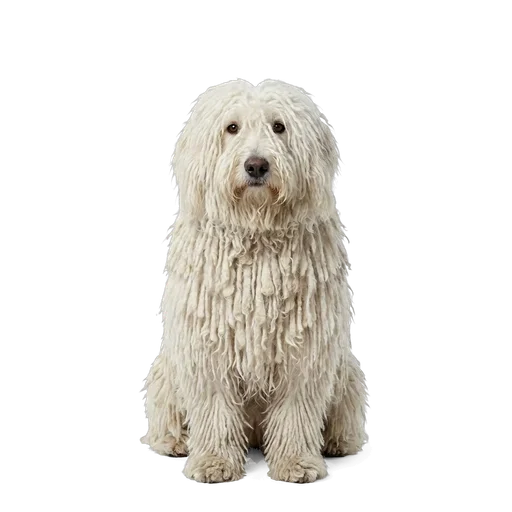
Origin: Hungary
Komondor
Get reminders for your Komondor's vaccines
Vaccination and parasite reminders, food-safety scans and health records — free to start in the Pethls app.


Good for
The Komondor is Hungary's great white livestock guardian, a giant of 36 to 59 kg hidden under a coat of thick white cords that really does look like a mop with legs. Bred for a thousand years to live outdoors with sheep and make its own decisions about threats, this is a calm, watchful, deeply independent dog that takes guarding seriously. With its own family it is steady and quietly devoted; with strangers and strange dogs it is reserved at best. The corded coat sheds very little but demands more hands-on care than almost any other breed. Expect a lifespan of 10 to 12 years, and be honest with yourself about experience and space before bringing one home.
Temperament & personality
A Komondor at home is surprisingly quiet. Adults spend much of the day resting, positioned where they can watch doors, gates and family members, then patrol at night, because predators historically hunted at night on the Hungarian plains. This is not a dog that asks for constant games or attention. It bonds hard to its people and its property, and it expresses that bond by guarding both.
Independence is the defining trait. For a thousand years shepherds needed a dog that would act without instruction, so the breed thinks first and obeys second. Training works, but it looks different from training a retriever: short sessions, real consistency, and a handler the dog respects. Nagging or harsh corrections just teach a Komondor to tune you out. Early, extensive socialization is non-negotiable, because a guardian that never met friendly strangers as a puppy tends to treat every visitor as a suspect at 50 kg.
With children in its own household the Komondor is typically patient and protective, though its size alone means supervision around small kids. Visiting children who wrestle or shriek can be misread as a threat to the family, so manage introductions carefully. Unfamiliar dogs entering the property are rarely welcome. This breed suits an experienced owner with a securely fenced rural or suburban property, not an apartment and not a first-time dog home.
Vaccination schedule
Komondor puppies follow the standard core schedule. The DHPP combination vaccine, covering distemper, hepatitis (adenovirus), parainfluenza and parvovirus, starts at six to eight weeks of age and repeats every three to four weeks until at least 16 weeks. Because maternal antibodies can block earlier doses, that final puppy shot at 16 weeks or later is the one that matters most. Rabies is given once between 12 and 16 weeks, with timing set by local law.
A DHPP and rabies booster follows at around one year of age. After that, most vets move DHPP to a three-year cycle, and rabies runs on a one-year or three-year cycle depending on the licensed vaccine and your region's rules. Because many Komondorok live outdoors around livestock, ask your vet about leptospirosis specifically; it spreads through wildlife urine in water and soil and is a sensible annual addition for this breed's lifestyle. Lyme and Bordetella vaccines are worth discussing if ticks are common locally or the dog ever boards.
Log the dates. A guardian breed that dislikes vet handling does better with planned, calm visits than with a scramble to catch up on lapsed boosters, and keeping the schedule written down somewhere reliable means reminders arrive before immunity gaps open.
Best food & diet
Feed a Komondor as a giant breed from day one. Puppies should eat a large or giant-breed growth formula with controlled calcium (roughly 1.2 percent on a dry matter basis) and moderate calories, because too-fast growth in a dog headed for 36 to 59 kg raises the risk of developmental joint disease, including the hip dysplasia this breed already carries. Keep puppies lean enough that you can feel ribs easily; a fat Komondor puppy is a future orthopedic patient.
Adults are moderate eaters for their size because their energy output is low outside patrol hours. Most do well on a quality large-breed adult food fed at the low end of the label range, adjusted to body condition every month. Under all that cord you cannot see weight gain, so put your hands on the dog: ribs should be palpable under light pressure and there should be a waist when you press through the coat.
Bloat is the big dietary danger. Feed two or three smaller meals rather than one large one, use a bowl at floor level, avoid intense exercise for an hour before and two hours after meals, and consider a slow-feeder bowl if the dog gulps. Discuss prophylactic gastropexy with your vet, often done during spay or neuter, because gastric dilatation-volvulus in a remote-living farm dog can be fatal before you reach a clinic.
Common health problems
Hip dysplasia heads the list, as it does for most giant breeds. The hip joint forms loosely, cartilage wears, and arthritis follows. Signs include bunny-hopping gait, reluctance on stairs and stiffness after rest. Buy only from parents with formal hip scoring (OFA in the US, BVA/KC in the UK, or an FCI hip grade of A from the national club), keep the dog lean for life, and treat early arthritis with weight control, joint support and vet-prescribed anti-inflammatories rather than waiting for obvious lameness.
Gastric dilatation-volvulus, or bloat, is the breed's true emergency. The stomach fills with gas and twists, cutting off blood supply. A Komondor that suddenly retches without producing anything, paces, drools and develops a tight, swollen belly needs a veterinary hospital within the hour, not observation overnight. Every member of the household should know these signs. Deep-chested giants like this are exactly the dogs gastropexy was developed for.
Entropion, an inward-rolling eyelid, appears in some lines. The lashes rub the cornea, causing squinting, tearing and eventually ulcers. It usually shows up in puppies or young adults and is fixed with a relatively routine surgery; left alone it can scar the eye. Because the cords eventually cover the face, check the eyes deliberately during grooming sessions rather than assuming you would notice a problem in passing. Lifespan is typically 10 to 12 years, decent for a giant.
Allergies & skin
First, the question everyone asks: no, the Komondor is not hypoallergenic. The cords trap loose hair and dander instead of dropping them around the house, which keeps floors cleaner, but the allergens are still there, concentrated in the coat itself. Allergy sufferers who groom or hug a Komondor will react.
The corded coat creates its own skin challenges. Air circulation at the skin is poor, and a coat that stays damp after rain or a bath becomes a warm, dark incubator. Moist dermatitis, yeast overgrowth and a musty mildew smell are the classic problems in poorly maintained cords. The fix is management: separate cords to the skin regularly, dry the dog completely after any soaking (this genuinely takes up to a full day with fans or a dog dryer), and never leave a wet Komondor to air-dry in a kennel.
True allergies, whether environmental (pollen, dust mites) or food-related, show up as itching, paw chewing, recurrent ear trouble and skin redness you may smell before you see under the cords. Any Komondor that scratches persistently deserves a proper workup, because scratching wrecks cord structure and self-trauma under a dense coat can go unnoticed until it is a large infected patch. Part the cords and inspect the skin, especially armpits, groin and around the ears, at least weekly.
Flea, tick & worm prevention
A corded coat is the best hiding place a parasite could ask for. Fleas and ticks can live for weeks inside mature cords without ever being seen, so this breed needs prevention that does not depend on you spotting the bug. Year-round coverage with a vet-recommended product, typically an oral isoxazoline chew or a reliable spot-on, is the sensible baseline, and orals have an edge here because spot-ons need skin contact that dense cords can interfere with.
Check the dog by hand anyway. After walks through grass or brush, work your fingers along the skin at the head, ears, neck, armpits and groin, the places ticks attach first and cords are shortest. Many Komondorok work around livestock, which raises exposure to ticks and to the tapeworms carried by fleas and by scavenged carcasses, so treat farm dogs as high risk rather than average.
Worming follows the standard canine pattern with a farm-dog asterisk. Puppies are dewormed every two weeks from two weeks of age until 12 weeks, then monthly to six months. Adults need routine roundworm and hookworm coverage, tapeworm treatment where flea exposure or carcass access exists, and monthly heartworm prevention wherever heartworm occurs. An annual fecal exam catches whatever the schedule misses. Dose everything to the dog's actual weight, which for this breed means putting a 40 to 59 kg animal on a scale, not guessing.
Medications & dosing
Every medication a Komondor receives is dosed to body weight, and with a giant breed the stakes of guessing are real. A dose calculated for a 40 kg dog given to a 58 kg male is a meaningful underdose; the reverse can be an overdose. Weigh the dog at least twice a year (most clinics let you use the lobby scale for free) and keep the number handy so it is available when the vet writes a prescription or when you buy the correct band of parasite preventive.
Never dose from human medicine cabinets. Ibuprofen, naproxen and paracetamol are toxic to dogs at doses people consider small, and a giant breed's size gives owners false confidence. Arthritis pain from hip dysplasia, common in older Komondorok, belongs on veterinary NSAIDs such as carprofen or meloxicam, prescribed at exact mg-per-kg rates with periodic blood work to watch kidney and liver values.
Two practical notes for this breed. First, giant breeds are often calm patients but poor pill takers behind all that facial hair; oral chews and flavored tablets tend to succeed where pushing a pill does. Second, always tell your vet the dog's real weight range when buying flea, tick and heartworm products, because the largest labeled band sometimes tops out below a big male Komondor and the dog may need a vet-calculated combination rather than an off-the-shelf single dose.
Grooming & coat care
The famous cords are not born, they are made. Puppies carry a soft, fluffy white coat that begins to mat into curds between one and two years of age as the woolly undercoat tangles into the coarser outer hair. Your job during this window is to split those forming clumps by hand, top to skin, into cord-sized sections every week or two. Skip this stage and you get one solid felt pelt instead of individual cords, which is uncomfortable for the dog and miserable to correct.
Mature cords are never brushed. Maintenance means hand-separating cords at the base regularly so they do not fuse, pulling out debris, trimming cords that drag, and keeping hygiene areas around the rear and mouth short and clean. Budget real time: an hour or two most weeks, more during coat change. The payoff is a dog that sheds almost nothing loose into the house.
Bathing is the operation people underestimate. The coat absorbs enormous amounts of water, so plan on a long soak with diluted shampoo squeezed through the cords, an even longer rinse (residual shampoo causes skin irritation and gray cords), then a full day of drying with fans or a forced-air dryer. A damp Komondor mildews, literally. Most owners bathe infrequently for exactly this reason and keep the dog clean with spot washing between full baths.
Round out the routine with basics that the coat hides: nails every three to four weeks, ears checked weekly since cords block airflow around them, teeth brushed several times a week, and a deliberate hands-on skin check whenever you separate cords. Some working and pet homes choose to clip the coat short instead of cording; the dog loses the iconic look and some weather protection, but it is a legitimate choice when maintenance time is honest concern rather than pride.
How the Komondor compares
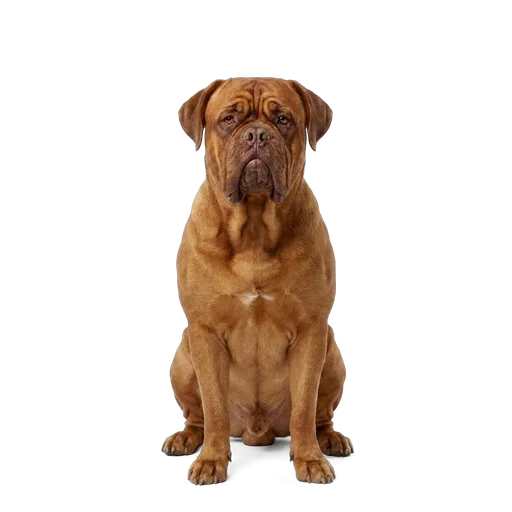
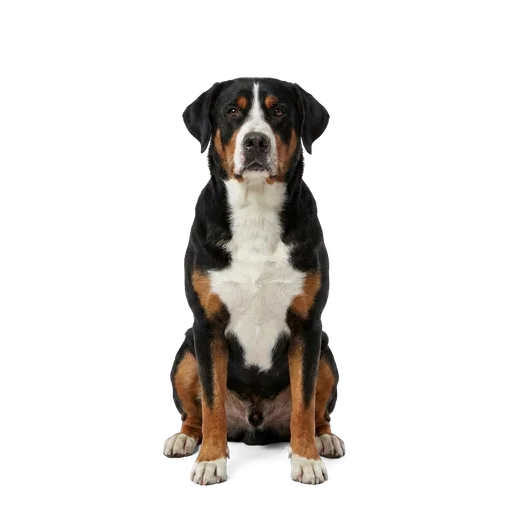
Deciding between similar breeds? Here is the Komondor next to Dogue de Bordeaux and Greater Swiss Mountain Dog.
| Komondor | Dogue de Bordeaux | Greater Swiss Mountain Dog | |
|---|---|---|---|
| Size | Large | Large | Large |
| Weight | 36-59 kg | 45-65 kg | 39-64 kg |
| Lifespan | 10-12 yrs | 5-8 yrs | 8-11 yrs |
| Activity | Calm | Calm | Calm |
| Shedding | Low | Medium | High |
| Good with kids | Yes | Yes | Yes |
| Apartment-friendly | No | No | No |
Frequently asked questions
Do Komondors shed?
Very little in the conventional sense. Loose hair gets trapped in the cords instead of falling on your floor, so shedding around the house is minimal. The trade is that all that hair has to be managed inside the coat through regular hand-separation of the cords.
Is a Komondor a good first dog?
No. This is an independent guardian bred to make its own decisions, and it is territorial by design. It needs an experienced owner, serious early socialization, secure fencing and space. First-time owners are far better served by a more biddable breed.
How long does the corded coat take to dry after a bath?
Realistically up to a full day, even with fans or a forced-air dryer. The cords hold water like a sponge, and a coat left damp can develop mildew and skin infections, so drying properly is not optional. Most owners bathe only when genuinely needed.
Can a Komondor live in an apartment?
It is a poor fit. Beyond sheer size at 36 to 59 kg, the breed patrols and guards by nature and often barks at night noises, which is how it worked on the Hungarian plains. A house with a securely fenced yard suits the breed's instincts far better.
What health problems should Komondor buyers ask breeders about?
Ask for formal hip scores on both parents because hip dysplasia is the breed's main orthopedic risk, ask about any history of bloat (gastric dilatation-volvulus) in the line, and check that puppies' eyes have been examined for entropion, an inward-rolling eyelid that needs surgical correction.
Related breeds
Health and care information is drawn from established veterinary sources and is general guidance, not veterinary advice. See our sources
Keep records for your Komondor
Vaccinations, food and treat safety, allergy alerts and parasite reminders - all tracked for your Komondor in the Pethls app.