

Origin: Germany
Miniature Pinscher
Get reminders for your Miniature Pinscher's vaccines
Vaccination and parasite reminders, food-safety scans and health records — free to start in the Pethls app.


Good for
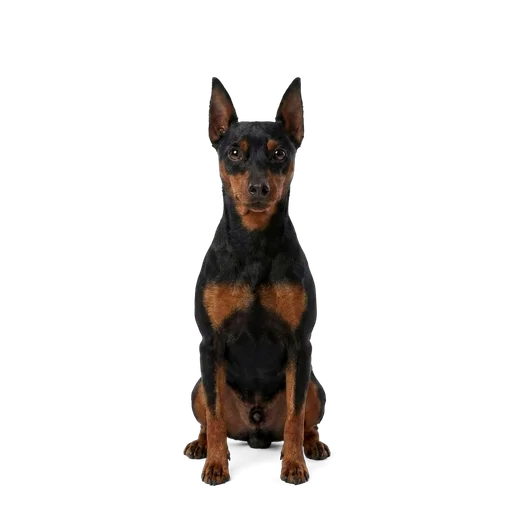
The Miniature Pinscher earned the nickname "King of Toys" for good reason. This is a bold, fearless little dog packed into a 4 to 5 kilogram frame, all high-stepping strut and endless curiosity. Bred in Germany long before it was a lapdog, the Min Pin is energetic, proud and smart, and it needs real exercise and mental work to stay happy. It is also a notorious escape artist that will test every gap in a fence. They live 12 to 16 years. If you want a lively, opinionated dog and can stay a step ahead of its schemes, a Min Pin is a good match.
Temperament & personality
Do not let the size fool you. The Min Pin carries itself like a much bigger dog, full of self-belief and drive. They are alert, quick to bark at anything new, and make surprisingly good little watchdogs. That boldness is charming, but it needs channeling through training and steady rules, or a Min Pin will happily run the household.
These dogs are busy and curious. They investigate everything, climb where they should not, and are famous for finding ways out of yards and crates. A secure home and a well-fenced garden are must-haves, and they should never be off-leash in an unfenced area.
They tend to do better with older, respectful children than with toddlers, since they will not tolerate rough handling and their small bodies are easily hurt. With early socialization they can live well with other pets, though their bold streak means introductions should be calm and supervised. First-time owners can manage a Min Pin, but should expect a strong personality that rewards consistency.
Vaccination schedule
Puppies begin their core DHPP series at about 6 to 8 weeks, protecting against distemper, hepatitis (adenovirus), parvovirus and parainfluenza. Boosters continue every 3 to 4 weeks until roughly 16 weeks of age, when the final puppy dose is given.
Rabies vaccination is usually given once between 12 and 16 weeks, following local law, then boosted at one year and every 1 to 3 years after that depending on the vaccine and regional requirements.
Leptospirosis is now recommended as a core vaccine for every dog, given as a 2-dose puppy series and then boosted annually, unlike the DHPP core boosters that follow an every 3 year schedule. Dogs with more water, rural or wildlife exposure face higher risk, which is part of why that yearly lepto booster matters. Other vaccines such as Bordetella and canine influenza remain optional and depend on how your dog lives. An active Min Pin that visits parks, training classes or boarding may benefit from Bordetella cover.
Best food & diet
Choose a complete, balanced food made for small or toy breeds, with kibble sized for a small mouth and calories suited to a tiny, high-energy dog. Despite their busy nature, Min Pins are easy to overfeed because they need so few calories overall, and extra weight strains their small joints.
Young puppies can be prone to hypoglycemia, so several small meals a day are safer early on. Adults usually do well on two measured meals daily. Because these dogs are so food-motivated, it is easy to hand out too many treats, so keep them to about 10 percent or less of daily calories.
Match portions to activity, body condition and age rather than the bag's generic chart. If your Min Pin's waistline disappears and you can no longer feel the ribs easily, that means it is carrying too much weight, so cut portions back. Fresh water should always be available.
Common health problems
Min Pins are generally robust, but several conditions run in the breed. Patellar luxation, a slipping kneecap, is common in toy dogs and ranges from an occasional skip in the step to a problem needing surgery. Legg-Calve-Perthes disease affects the hip joint in young small-breed dogs when the femoral head loses its blood supply, causing pain and limping.
Progressive retinal atrophy, a gradual retinal degeneration that leads to blindness, is seen in the breed and can be screened for with a DNA test. Ask breeders about eye testing in the parents.
Mucopolysaccharidosis VI is a breed-specific inherited storage disease that affects how the body processes certain sugars, and it can cause bone, joint and other problems. A DNA test exists, so responsible breeders test their stock to avoid producing affected puppies.
Allergies & skin
The Min Pin's short, smooth, close-lying coat is low-maintenance and does not trap much, which keeps skin problems relatively uncommon compared with heavily coated breeds. Even so, they can occasionally develop allergies like any dog, whether from fleas, food or environmental triggers such as pollen and dust.
Signs of an allergy include itching, licking or chewing at the paws, recurrent ear infections, and red or irritated skin. Flea allergy is one of the most common causes of itching, which is another reason to keep parasite prevention up to date year-round.
Because the coat is so thin, these dogs feel cold and can sunburn on exposed areas in strong sun. A coat in winter and shade in summer both help. If skin problems appear, ask your vet to identify the cause instead of guessing, since food and environmental allergies are managed quite differently.
Flea, tick & worm prevention
Keep a Min Pin on year-round flea, tick and worm prevention, dosed strictly by weight. For a 4 to 5 kilogram dog, choose a product rated for its weight band and let your vet match the exact option, whether a monthly chew, a spot-on or a longer-lasting collar.
The short coat makes it easier to spot fleas and ticks during a quick check, especially after walks in grass or woods. Run your hands over the body and check the ears, neck and between the toes.
Worming targets intestinal parasites such as roundworms, hookworms, tapeworms and whipworms, with puppies dewormed on a set early schedule and adults on a routine your vet advises. Where heartworm is present, monthly heartworm prevention is essential, and combination products that cover fleas, worms and heartworm in one dose make year-round protection easier to keep up.
Medications & dosing
All medications for a Min Pin should be weight-based and prescribed by your vet. In a toy dog, small dosing errors matter a great deal, so never guess amounts or repurpose a larger dog's medication, and never give human painkillers such as ibuprofen or paracetamol, which are toxic to dogs.
For orthopedic pain, for example after patellar or hip surgery, vets use dog-specific anti-inflammatories dosed precisely to body weight. Follow the schedule exactly and finish the full course of any antibiotics.
Keep an accurate, current weight on file, because in such a small dog even a modest weight change shifts the correct dose. Store all medicines safely out of reach.
Grooming & coat care
Grooming a Miniature Pinscher is refreshingly simple. The short, hard, glossy coat needs only a quick weekly brush or a rub with a grooming mitt to remove loose hair and keep it shining. They shed, but lightly, and baths are only needed occasionally when the dog is actually dirty.
Because the coat offers little insulation, focus more on temperature than on coat maintenance. A sweater or coat in cold weather is practical rather than decorative, since these dogs genuinely feel the chill.
Do not skip the routine basics. Trim nails regularly, since Min Pins are active and long nails affect their high-stepping gait, check and clean the ears, and brush the teeth several times a week to protect against dental disease, which small breeds are especially prone to.
How the Miniature Pinscher compares
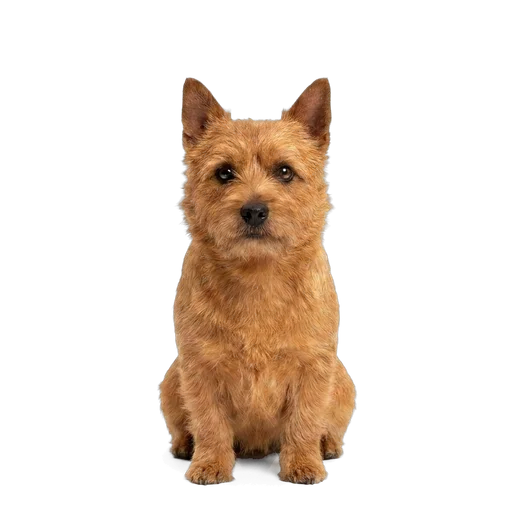
Deciding between similar breeds? Here is the Miniature Pinscher next to Affenpinscher and Norwich Terrier.
| Miniature Pinscher | Affenpinscher | Norwich Terrier | |
|---|---|---|---|
| Size | Small | Small | Small |
| Weight | 4-5 kg | 3-6 kg | 5-5 kg |
| Lifespan | 12-16 yrs | 12-15 yrs | 12-15 yrs |
| Activity | Active | Moderate | Active |
| Shedding | Low | Low | Low |
| Good with kids | No | No | Yes |
| Apartment-friendly | Yes | Yes | Yes |
Frequently asked questions
Why is the Miniature Pinscher called the "King of Toys"?
The nickname reflects its bold, confident, larger-than-life personality. Despite weighing only 4 to 5 kilograms, the Min Pin struts with real self-assurance and behaves like a much bigger dog.
Is the Min Pin a miniature Doberman?
No. Although they look alike, the Miniature Pinscher is an older, separate German breed and is not a shrunken Doberman. The resemblance is coincidental rather than a direct relationship.
Are Miniature Pinschers good with children?
They do better with older, respectful children than with toddlers. They will not tolerate rough handling and are easily injured by their small size, so play with young kids should always be supervised.
Do Min Pins really escape a lot?
Yes, they are notorious escape artists. They are curious and determined, so a secure home and a well-fenced garden are essential, and they should never be off-leash in an unfenced space.
How much exercise does a Miniature Pinscher need?
More than their size suggests. They are high-energy and need daily walks plus active play and mental stimulation, or their curiosity and boredom can turn into mischief and problem behavior.
Related breeds

Health and care information is drawn from established veterinary sources and is general guidance, not veterinary advice. See our sources
Keep records for your Miniature Pinscher
Vaccinations, food and treat safety, allergy alerts and parasite reminders - all tracked for your Miniature Pinscher in the Pethls app.