

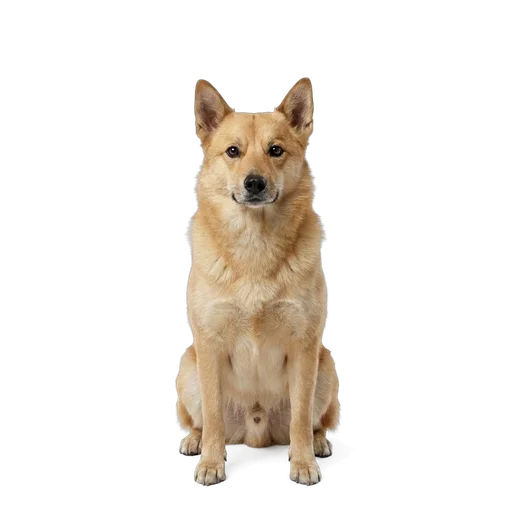
Origin: Norway
Norwegian Buhund
Get reminders for your Norwegian Buhund's vaccines
Vaccination and parasite reminders, food-safety scans and health records — free to start in the Pethls app.


Good for
The Norwegian Buhund sailed with the Vikings and then spent the next thousand years running Norwegian farms: herding sheep and cattle, guarding the yard, and keeping the family company through long winters. The name comes from bu, the Norwegian word for homestead, and an all-purpose homestead dog is exactly what you get. Buhunds are medium spitz dogs of 14 to 18 kilograms in wheaten or black, quick-witted, cheerful and genuinely affectionate with their people. They need real daily exercise, they love training, and they use their voice freely. Given both, they are healthy, upbeat companions for 12 to 15 years.
Temperament & personality
A Buhund is what happens when you ask one dog to do every job on a farm. It herded livestock in the morning, watched the yard through the day, and curled up with the children at night, and the modern dog still runs all three programs. Expect a bright, busy, people-oriented dog that wants a role in the household and will invent one, possibly involving your socks, if you fail to provide it. Among the spitz breeds, Buhunds are unusually biddable and score well in obedience, agility and herding trials; they actually enjoy training sessions rather than merely tolerating them.
The energy is real. This is the most driven of the friendly Nordic herders, and thirty minutes around the block will not touch it. A Buhund needs a solid hour or more of proper exercise daily, plus mental work, and repays it by being calm and pleasant indoors. Shortchange the exercise and you get barking, digging and freelance herding of children and cats. First-time owners can succeed with a Buhund, but only if they are honestly active people; this is not a beginner dog for a sedentary home.
As a watchdog the Buhund is alert without being sharp. It announces every arrival loudly and then greets the visitor like a returning relative, since the breed carries very little true aggression. With kids it is playful and durable, though the herding heritage means young dogs may try to gather running children with a nudge or nip at heels until taught otherwise. Most Buhunds live well with other dogs and with cats they know, keeping in mind that fast-moving small animals outdoors read as work.
Vaccination schedule
Buhund puppies follow the universal core protocol. The DHPP combination vaccine against distemper, adenovirus, parvovirus and parainfluenza starts at 6 to 8 weeks and repeats every 3 to 4 weeks until at least 16 weeks of age. Expect three or four doses in total; the finale at 16 weeks or later is critical because antibodies from the mother can neutralize the earlier shots.
Rabies is a single dose given between 12 and 16 weeks depending on local law, boosted at one year, then usually every three years. DHPP follows the same one-year then three-year booster cadence. Keep the certificates; an adventurous breed like this tends to end up at daycare, dog sports venues and boarding kennels, all of which will ask for proof.
Those same venues make non-core vaccines relevant. Bordetella for kennel cough is required almost everywhere dogs gather, and leptospirosis is a sensible addition for a dog that hikes, swims and investigates puddles and wildlife trails. Canine influenza may be worth adding in regions with outbreaks. Your vet can match the extras to your Buhund's actual social calendar.
Best food & diet
Feed a complete medium-breed diet appropriate to life stage. Buhund puppies should be raised lean on a standard puppy formula with controlled calcium, because hip dysplasia occurs in the breed and rapid, roly-poly puppy growth is a known risk multiplier. Keep a puppy where you can just feel ribs, and let the growth plates close before starting serious running or jumping sports, usually around 12 to 15 months.
An adult of 14 to 18 kilograms doing a genuine Buhund workload needs roughly 800 to 1,200 calories daily, and a sporty dog in heavy training can need more; a less active pet Buhund sits below that range, so feed to the dog you actually have or you will overfeed a quieter one. Split food into two meals, weigh portions rather than eyeballing them, and adjust to condition monthly. Active as they are, Buhunds are also efficient northern dogs, and neutered or under-exercised individuals gain weight quietly under that thick coat where nobody notices until the vet visit.
Use the breed's food drive for good. Buhunds train brilliantly for kibble, so reserve a portion of each meal for training and puzzle feeders, which covers mental exercise and portion control in one move. Omega-3 fatty acids from fish oil support the coat and aging joints and suit the breed well, but agree the dose with your vet, and treat anything beyond that, like joint supplements for a dysplastic dog, as a medical decision rather than a shopping one.
Common health problems
The Norwegian Buhund is a sound breed. Centuries as a working farm dog in a harsh climate, followed by sensible modern breeding, left it with a short list of hereditary concerns and a typical lifespan of 12 to 15 years. Plenty of Buhunds compete in agility well into their senior years. The issues that do occur are screenable, which puts a lot of power in the buyer's hands.
Hip dysplasia is the main orthopedic concern. Both parents of any litter should have official hip scores, and owners should keep dogs lean and well-muscled for life, since body condition changes the course of the disease more than any supplement. Signs to watch for in adults include stiffness after rest, a swaying or bunny-hopping rear gait, and reluctance to jump into the car. Management ranges from weight loss and physiotherapy to NSAIDs and, in severe cases, surgery.
The eyes carry the other two known problems. Hereditary cataracts in Buhunds often appear early, sometimes picked up in puppies on an ophthalmologist's exam rather than by eye, so annual eye exams are standard for breeding dogs; many cataracts stay small, while significant ones can be removed surgically. Progressive retinal atrophy, a gradual degeneration of the retina that begins with night blindness, has also been identified in the breed. A dog that hesitates on evening walks or bumps things in dim rooms deserves a retinal exam. Affected dogs go blind slowly but adapt remarkably well in a stable home.
Allergies & skin
The Buhund is not hypoallergenic, and no honest breeder will claim otherwise. The wheaten or black double coat sheds steadily all year and comes out in drifts during the seasonal molts, carrying dander with it. Allergic households should spend unhurried time with adult Buhunds, ideally in the dog's own home, before committing to a puppy.
The skin itself rarely causes trouble. That harsh, weather-resistant outer coat kept farm dogs dry through Norwegian sleet, and it still protects the skin from sun, scrapes and biting insects. The practical caveat is visibility: wounds, ticks and early hot spots vanish under dense fur, so make a weekly nose-to-tail hands-on check part of the grooming habit, and dry the undercoat properly after swims and downpours so damp skin cannot fester.
Buhunds can sometimes develop the same allergies as any dog. Atopy shows up as paw licking, ear infections and belly scratching, usually seasonal at first; food allergy looks similar but ignores the calendar. Either pattern warrants a structured vet workup, since random diet hopping muddies the picture. And resist any summer urge to shave the dog. The double coat buffers heat as well as cold, and a clipped undercoat often regrows dense, felted and worse at its job.
Flea, tick & worm prevention
A dog that spends its life in grass, woods and water needs year-round parasite cover, and the Buhund's dense coat means you will not see a problem starting. Choose a flea and tick preventive with your vet, whether a monthly oral chew, a longer-acting oral chew dosed every 12 weeks, a spot-on, or a long-acting collar, and match the product to its own labeled interval and to your dog's real weight within the 14 to 18 kilogram range. Oral products have a practical edge in thick-coated breeds because nothing has to penetrate the undercoat to work.
Tick checks after outdoor days are worth the two minutes. Run your hands against the coat over the whole dog, concentrating on ears, chin, neck, armpits, groin and toes. A found tick comes off with a tick hook, gripped close to the skin and pulled steadily without crushing. Fast removal is genuine protection, since transmission of Lyme and other tick-borne diseases usually takes many hours of attachment.
Worming runs on the standard schedule: every two weeks from two to twelve weeks of age, monthly to six months, then every three months for adults, or continuous coverage via a monthly combination preventive. An active country-walking Buhund that samples carrion, rodent trails or livestock droppings sits at the higher-risk end and may need monthly treatment or regular fecal exams. In heartworm areas, monthly prevention is non-negotiable, and lungworm cover matters in parts of Europe, so anchor the plan to local advice.
Medications & dosing
Every veterinary drug your Buhund will ever take, from wormers to anesthetics, is dosed by weight, so an accurate current weight is a piece of safety equipment. A fit 14 kilogram female and a big 18 kilogram male differ by nearly a third; a dose that is right for one is wrong for the other. Weigh the dog at least yearly, after any noticeable condition change, and before starting or refilling any prescription.
Keep human painkillers away from dogs entirely. Ibuprofen, naproxen, aspirin and paracetamol all cause serious harm at small doses, from stomach ulcers to kidney and liver failure. A Buhund that pulls up lame after an agility run or a hard hike gets rest, cold assessment and a vet call. If ongoing pain relief is needed, for hip dysplasia for example, vets prescribe canine NSAIDs such as carprofen or meloxicam at exact milligram-per-kilogram doses, with routine blood monitoring for long-term use.
Sporting dogs collect prescriptions over a lifetime, so build good habits early. Finish antibiotic courses completely, give medications with food when the label says so, and log every dose so a busy household never doubles up. Store chewable meds like they are what they smell like, which is treats; a food-motivated Buhund that raids a month of flavored wormers needs an emergency vet immediately.
Grooming & coat care
For all its density, the Buhund coat is refreshingly practical. The outer coat is short enough to resist matting, dirt dries and brushes out, and there is nothing to trim, strip or style. Outside molting season, one thorough session a week with a slicker brush and an undercoat rake keeps the coat healthy, spreads skin oils, and gives you that weekly hands-on health check.
The molt is another matter. Twice a year, spring and autumn, the undercoat releases all at once and a Buhund sheds an astonishing amount of wool. Brush daily during these two to four week periods, and use the classic shortcut: a warm bath, a good shampoo-out, and a thorough blow-dry that pushes the loose undercoat free in clouds. What comes out on the grooming table stays off your furniture. Intact females often add a coat drop after each season.
Bathing outside molts should be rare, every two or three months at most, since the coat's oils are its waterproofing. Keep nails short with clipping or grinding every few weeks, because active dogs still wear nails unevenly. Check ears weekly, aim for tooth brushing several times a week, and never clip the coat down; a shaved double coat loses its insulation against both cold and heat and may never grow back correctly.
How the Norwegian Buhund compares
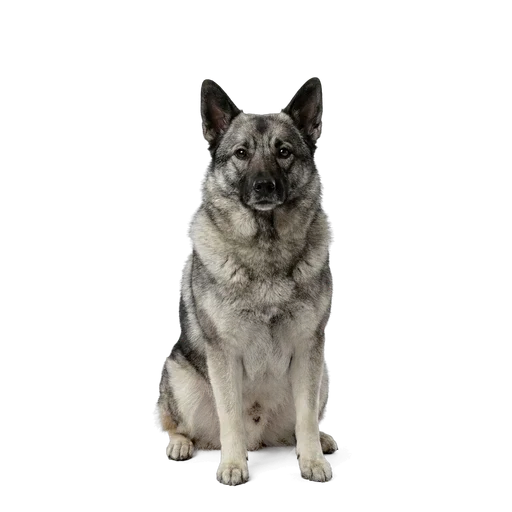
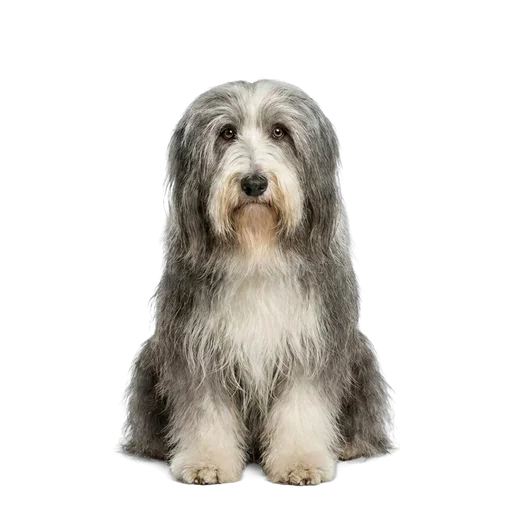
Deciding between similar breeds? Here is the Norwegian Buhund next to Norwegian Elkhound and Bearded Collie.
| Norwegian Buhund | Norwegian Elkhound | Bearded Collie | |
|---|---|---|---|
| Size | Medium | Medium | Medium |
| Weight | 14-18 kg | 20-25 kg | 20-25 kg |
| Lifespan | 12-15 yrs | 12-15 yrs | 12-14 yrs |
| Activity | Active | Active | Active |
| Shedding | High | High | Medium |
| Good with kids | Yes | Yes | Yes |
| Apartment-friendly | No | No | No |
Frequently asked questions
How much exercise does a Norwegian Buhund need?
At least an hour of genuine exercise every day, plus mental work like training, scent games or puzzle feeders. Buhunds were all-day farm workers and stay busy-minded indoors when under-exercised, usually loudly. They excel at agility, rally, herding trials and running or hiking with their owners.
Are Norwegian Buhunds easy to train?
By spitz standards, very. Buhunds are quick learners with real food drive and a genuine enjoyment of working with people, which is why they show up in obedience and agility rings more than most Nordic breeds. They still think for themselves, so keep sessions short, upbeat and rewarding rather than drilling repetitions.
Do Norwegian Buhunds bark a lot?
Yes. Alerting the farm was half the job description, and Buhunds announce arrivals, noises and general opinions with enthusiasm. Exercise, training a quiet cue and managing boredom reduce it substantially, but the breed will never be silent, which is worth weighing if you share walls with neighbors.
What health problems affect Norwegian Buhunds?
The breed is generally robust with a 12 to 15 year lifespan. Known hereditary issues are hip dysplasia, hereditary cataracts that can appear young, and progressive retinal atrophy. Choose a breeder who hip-scores both parents and does annual eye exams, and keep your dog lean to protect its hips.
Are Norwegian Buhunds good with kids and other pets?
Buhunds are affectionate, playful family dogs that generally do well with children and other dogs. Young dogs may try to herd running kids with nudges or heel nips until trained out of it, so supervise early play. Most live fine with familiar cats, though fast-moving animals outdoors can trigger chasing.
Related breeds
Health and care information is drawn from established veterinary sources and is general guidance, not veterinary advice. See our sources
Keep records for your Norwegian Buhund
Vaccinations, food and treat safety, allergy alerts and parasite reminders - all tracked for your Norwegian Buhund in the Pethls app.