

Origin: United Kingdom
Old English Sheepdog
Get reminders for your Old English Sheepdog's vaccines
Vaccination and parasite reminders, food-safety scans and health records — free to start in the Pethls app.


Good for
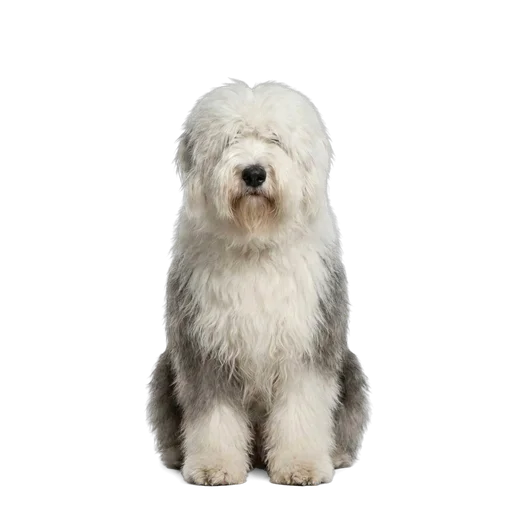
The Old English Sheepdog is the big, shaggy, good-natured clown of the herding world, instantly recognisable by its profuse gray-and-white coat and rolling, bear-like walk. Known affectionately as the "bobtail" for its historically docked tail, this British breed weighs anywhere from 27 to 45kg and lives around 10 to 12 years. Behind the hair sits a gentle, playful dog that adores its family and is famously patient with children. These dogs were bred to drive cattle and sheep to market, so they need regular daily exercise and room to move, though they aren't a hyperactive breed. The catch is the coat, which mats fast and demands serious grooming, making the breed a labour of love rather than a low-maintenance choice.
Temperament & personality
Old English Sheepdogs are sociable, easy-going, and endlessly affectionate. They tend to be the family joker, bumping into furniture, leaning their considerable weight against your legs, and inviting play well into adulthood. Most are gentle and tolerant with children, though their size means a boisterous bobtail can knock over a toddler simply by turning round.
They are people-oriented and don't cope well with being left alone for long stretches. A bored or lonely Old English Sheepdog can become destructive or noisy, so this is a breed that wants to be in the middle of family life, not left in a garden.
The herding heritage still shows. Some will try to gather children or other pets, occasionally with a gentle nudge or bump, and they can be watchful without being aggressive. Early socialization and consistent, kind training help them grow into steady, well-mannered adults.
They are intelligent but have an independent streak, so training takes patience and a sense of humor. Harsh methods backfire with this soft-natured breed. Most get on well with other dogs and household pets when introduced properly.
Vaccination schedule
Old English Sheepdog puppies follow the standard UK course. The core DHPP vaccine protects against distemper, hepatitis (adenovirus), parvovirus, and parainfluenza, usually starting at 6 to 8 weeks with a second dose at 10 to 12 weeks and often a final dose around 16 weeks.
Rabies vaccination isn't required for dogs staying in the UK but is compulsory for travel abroad. It can be given from 12 weeks of age, and there is a mandatory 21-day wait after vaccination before your dog can travel. Separately, an Animal Health Certificate is the travel document your vet issues to confirm your dog meets the entry rules.
Leptospirosis is now recommended as a core vaccine for every dog, and the risk is higher for a large, outdoorsy breed that walks near water, farmland, and wildlife. Your vet may also advise the kennel cough vaccine if your dog boards or mixes with other dogs regularly.
After the puppy series, your dog moves onto a booster program. The core distemper, hepatitis, and parvovirus components are typically boosted every three years, while leptospirosis is boosted annually. Some annual leptospirosis vaccines also include parainfluenza, so that yearly shot covers Pi as well, and your vet will track what's due and remind you.
Best food & diet
As a large breed, the Old English Sheepdog benefits from a diet formulated for big dogs, fed to the correct life stage. Large-breed puppy food is important during growth because it controls calcium and calories to support steady bone and joint development, which lowers the risk of orthopaedic problems later. Puppies usually stay on it until 12 to 18 months.
Like many large, deep-chested breeds, the Old English Sheepdog may develop bloat, also called gastric dilatation-volvulus, a life-threatening emergency where the stomach fills with gas and can twist. To reduce the risk, feed two or three smaller meals a day rather than one large one, avoid heavy exercise for an hour or so before and after eating, and don't let your dog gulp a big volume of water immediately after a meal. Using a slow-feeder bowl helps a fast eater.
All that coat hides the body, so weigh meals and check body condition by feel every couple of weeks. Keeping a large dog lean protects its hips and joints for life.
Learn the warning signs of bloat: a swollen or hard belly, unproductive retching, drooling, restlessness, and obvious distress. This is an immediate emergency, so contact your vet without delay if you see them.
Common health problems
The Old English Sheepdog is generally robust but carries a handful of breed risks. Hip dysplasia, a malformation of the hip joint that leads to arthritis and lameness, occurs here as in many large breeds, which is why reputable breeders hip-score their dogs before breeding.
The eyes and nervous system carry a few risks as well. Cataracts, a clouding of the lens that can affect vision, do turn up in the breed, and cerebellar ataxia is an inherited neurological condition affecting balance and coordination. Congenital deafness, present from birth in one or both ears, also occurs, and a BAER hearing test can confirm a puppy's hearing status.
Hypothyroidism, an underactive thyroid, can show up as weight gain, lethargy, and coat changes and is straightforward to manage with a daily tablet once diagnosed by a blood test.
The condition to take most seriously is bloat (gastric dilatation-volvulus), covered in the diet section, because it can kill a dog within hours. Buying from a breeder who health-tests for hips, eyes, and hearing, and keeping up with annual vet checks, gives your dog the best start.
Allergies & skin
Under the dense coat, Old English Sheepdogs can sometimes develop skin problems, and the sheer volume of hair means trouble is easy to miss. Atopic dermatitis, an allergic reaction to environmental triggers like pollen, dust mites, and grass, causes itching, licking, and recurrent infections in some dogs.
The coat traps moisture close to the skin, so damp fur that isn't dried and brushed out can lead to hot spots, patches of inflamed, infected skin that flare up quickly. Thorough drying after baths, walks in the rain, or a swim, together with regular brushing right down to the skin, is the best prevention.
Food sensitivities are possible and usually relate to a particular protein. If your dog is persistently itchy with no seasonal pattern, your vet can help work through an exclusion diet to find the cause.
Keep the coat around the rear end and paws clean and trimmed, since a soiled or matted coat there quickly irritates the skin. Reliable flea control is essential too, as flea allergy is a common itch trigger and fleas are hard to spot in a coat this thick.
Flea, tick & worm prevention
A large, thickly coated dog that spends time outdoors needs consistent, year-round parasite control. Fleas and ticks are genuinely difficult to see in an Old English Sheepdog's coat, so relying on spotting them is a losing game. Use a vet-recommended preventive as spot-on, tablet, or collar.
Ticks are a real concern for a countryside dog. After walks in long grass or woodland, run your hands down to the skin and check the ears, face, armpits, and between the toes, removing any tick promptly with a proper tick-removal tool.
Worming should cover roundworms, tapeworms, and lungworm where it's a local risk, since lungworm is spread by slugs and snails and can be serious. Puppies are wormed frequently, often every two weeks until 12 weeks old, then monthly to six months. Adults are typically treated every one to three months depending on lifestyle.
All parasite products are dosed by body weight, and for a dog that can top 40kg getting the weight right matters. Weigh your dog, or have the vet do it, and use the dose band that matches, rather than guessing from an old figure.
Medications & dosing
Medication for an Old English Sheepdog is always dosed by current body weight and given on veterinary direction. With a weight range from 27 to 45kg, an out-of-date weight can lead to a meaningful dosing error, so keep an accurate figure on hand.
This breed's size makes anaesthesia and sedation something to plan carefully, particularly for grooming under sedation, dental work, or surgery. Give your vet a full list of anything your dog is already taking, including supplements, so nothing interacts.
Never give human medicines like ibuprofen or paracetamol, which are toxic to dogs, and don't reach for leftover or borrowed prescriptions. Even something that seems minor should be cleared with your vet first.
Always finish a prescribed course in full, especially antibiotics, even if your dog appears to have recovered. Store all medication safely out of reach, remembering that a large dog can get to higher surfaces than you might expect.
Grooming & coat care
The Old English Sheepdog has one of the most demanding coats of any breed. The profuse double coat, a waterproof shaggy topcoat over a soft undercoat, mats extraordinarily fast, and neglect quickly leads to painful, skin-tight tangles that can only be shaved out. Plan on thorough brushing several times a week, ideally most days, working right down to the skin rather than just over the surface.
Line-brushing is the technique to learn: part the coat in sections and brush each layer from the skin outwards so you don't leave hidden mats underneath. Pay special attention to friction areas behind the ears, under the legs, and around the rear.
Most owners rely on a professional groomer every 6 to 8 weeks for bathing, drying, and tidying, and many choose to keep their dog in a shorter "puppy cut" or "teddy" trim that is far more practical than full coat. There's no shame in a shorter clip; for a lot of families it's the difference between a happy dog and a matted one.
The coat also grows over the eyes and around the mouth and rear, so keep those areas trimmed for vision, hygiene, and comfort. Add regular nail trims, ear checks, and dental care to complete the routine, and dry the coat fully after any bath or wet walk to prevent hot spots.
How the Old English Sheepdog compares
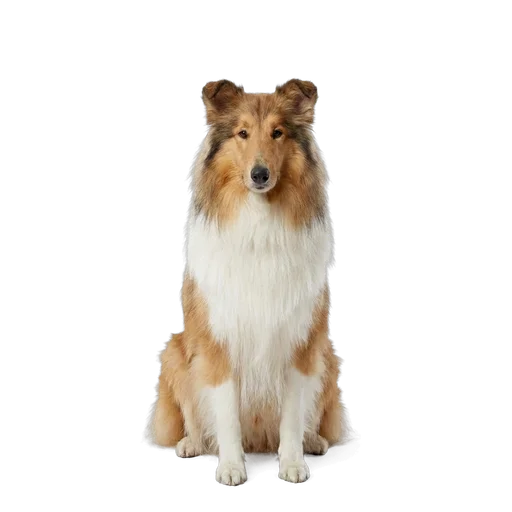
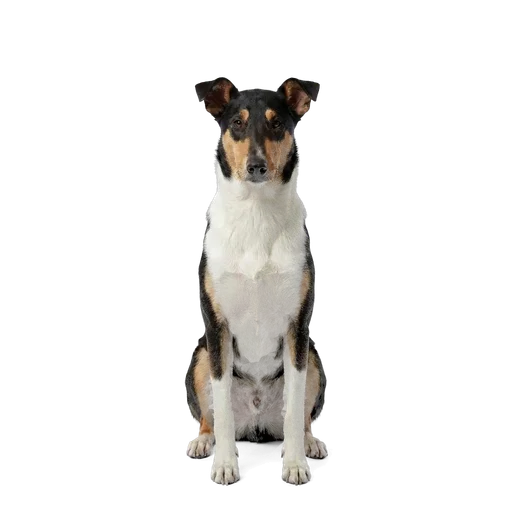
Deciding between similar breeds? Here is the Old English Sheepdog next to Rough Collie and Smooth Collie.
| Old English Sheepdog | Rough Collie | Smooth Collie | |
|---|---|---|---|
| Size | Large | Large | Large |
| Weight | 27-45 kg | 20-34 kg | 20-34 kg |
| Lifespan | 10-12 yrs | 12-14 yrs | 12-14 yrs |
| Activity | Moderate | Moderate | Moderate |
| Shedding | High | High | High |
| Good with kids | Yes | Yes | Yes |
| Apartment-friendly | No | No | No |
Frequently asked questions
How much grooming does an Old English Sheepdog really need?
A lot. The dense coat mats within days if neglected, so it needs thorough brushing down to the skin most days plus a professional groom every 6 to 8 weeks. Many owners keep the dog in a shorter clip to make it manageable.
Are Old English Sheepdogs good with children?
Yes, they're famously gentle, patient, and playful with kids. The main thing to watch is their size, since a big, bouncy dog can accidentally knock over a small child, so supervise interactions with toddlers.
Is bloat a risk in this breed?
Yes. As a large, deep-chested dog, the Old English Sheepdog is at risk of bloat (gastric dilatation-volvulus), a life-threatening emergency. Feeding smaller meals, avoiding heavy exercise around mealtimes, and knowing the warning signs all help. Contact a vet immediately if you see a swollen belly and unproductive retching.
Do Old English Sheepdogs need a lot of exercise?
They need moderate but regular daily exercise, reflecting their history driving cattle. A couple of good walks plus some play keeps them fit and happy. They aren't hyperactive, but they do need space and shouldn't be left idle for long.
Are they suitable for first-time owners?
Not really. They're loving and rewarding, but the grooming workload, size, and independent streak make them a big commitment. A first-time owner who genuinely understands the coat demands and has the time can succeed, but many find them more than expected.
Related breeds
Health and care information is drawn from established veterinary sources and is general guidance, not veterinary advice. See our sources
Keep records for your Old English Sheepdog
Vaccinations, food and treat safety, allergy alerts and parasite reminders - all tracked for your Old English Sheepdog in the Pethls app.