

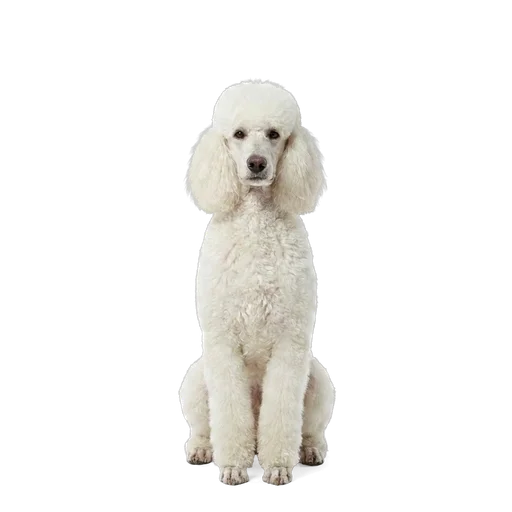
Origin: France
Standard Poodle
Get reminders for your Standard Poodle's vaccines
Vaccination and parasite reminders, food-safety scans and health records — free to start in the Pethls app.


Good for
The Standard Poodle is a large, athletic dog from France that consistently ranks among the most intelligent dog breeds. Most people are drawn in by that low-shedding curly coat, which suits many households sensitive to dog hair, but the personality is what wins them over: quick, playful, and deeply tuned in to the family. Do not let the show clips fool you. Underneath the grooming, this is a working water retriever that needs a real job, real exercise, and a coat routine you commit to for the dog's whole life.
Temperament & personality
Standard Poodles are thinkers. They learn commands in a handful of repetitions, read household routines fast, and get bored faster than almost any other large breed. A bored Poodle invents its own entertainment, usually involving your shoes, the trash, or a newly discovered talent for opening doors.
They bond hard with their people and tend to shadow one person around the house. Most are friendly with visitors after a brief size-up, though some lines lean reserved and bark at unfamiliar sounds. Early, steady socialization smooths this out.
With kids and other pets they are patient and gentle when raised together. The breed's sensitivity is the thing to respect: harsh corrections shut a Poodle down and erode trust. Reward-based training gets far more out of them, and they genuinely enjoy the mental challenge of learning something new.
Vaccination schedule
Standard Poodle puppies follow the standard core protocol. DHPP (distemper, hepatitis/adenovirus, parvovirus, parainfluenza) starts at 6 to 8 weeks, then repeats every 3 to 4 weeks until the puppy is at least 16 weeks old. That usually means shots at roughly 8, 12, and 16 weeks.
Rabies is given once at 12 to 16 weeks depending on local law, with a booster one year later. After that, rabies runs on a 1-year or 3-year cycle set by your vaccine type and regional regulations.
Core vaccines get a booster at around 12 months, then every 1 to 3 years. Leptospirosis is now a core vaccine recommended for every dog, with a 2-dose puppy series followed by an annual booster (unlike the every-1-to-3-year DHPP boosters). Non-core options such as Bordetella and canine influenza depend on lifestyle. Given how much Poodles love water and outdoor activity, their exposure risk is higher, which is why the annual Lepto booster matters, since it spreads through standing water and wildlife urine. Confirm the plan with your vet.
Best food & diet
A Standard Poodle does well on a complete diet formulated for large breeds, fed to maintain a lean, visible waist. These dogs carry a lot of energy but also a deep chest, and extra weight strains joints and raises risk down the line.
Because bloat is a real concern in this breed, feeding management matters as much as the food itself. Split the daily ration into two meals rather than one large bowl, avoid heavy exercise for an hour before and after eating, and do not let the dog gulp a full stomach of water right after a run.
Some Standard Poodles react to common protein and grain sources. Lamb, beef, dairy, and wheat are the usual triggers flagged in this breed. If you see chronic ear infections, itchy skin, or loose stools, an elimination diet run with your vet, swapping to a single novel protein, is the reliable way to find the culprit rather than guessing.
Common health problems
Standard Poodles are generally healthy for a large breed, but several conditions run in the lines. Like many large breeds, they can occasionally develop hip dysplasia, so it is worth screening for and buying from breeders who hip-score their stock. Gastric dilatation-volvulus, or bloat, is an emergency every deep-chested dog owner should know cold: a distended abdomen, unproductive retching, restlessness, and pale gums mean an immediate vet trip, not a wait-and-see night.
Addison's disease (hypoadrenocorticism) turns up in the breed too. Signs are vague at first, lethargy, poor appetite, vomiting, weakness that comes and goes, which is why it earns the nickname the great pretender. A simple blood test rules it in or out, and once diagnosed it is very manageable with hormone replacement.
Eyes and skin round out the list. Progressive retinal atrophy shows up in some lines and causes gradual vision loss, so responsible breeders test for it. Epilepsy also occurs in some dogs and can usually be controlled with medication. Sebaceous adenitis, an immune-driven skin disease that inflames the oil glands, is another to watch for, and responsible breeders may test for it. Annual vet checks and knowing your dog's baseline catch most of these early.
Allergies & skin
The dense curly coat hides skin trouble until it is well underway, so hands-on checks during grooming matter. Standard Poodles get both food allergies and environmental atopy. Grass pollen and tree pollen are common seasonal triggers, and reactions usually show as itchy paws the dog licks raw, red belly skin, and recurring ear infections.
Those ears deserve special attention. Poodle ear canals grow hair and trap moisture, a perfect setup for yeast and bacteria. Keep them dry after swimming and baths, and have your vet or groomer manage the ear hair rather than aggressively plucking it yourself.
For food-driven itch, an elimination diet is the diagnostic tool. For environmental allergies, your vet may reach for medicated shampoos, omega-3 supplements, antihistamines, or newer targeted drugs like Apoquel or Cytopoint when the itch is severe. Do not stack over-the-counter products blindly; get a diagnosis first.
Flea, tick & worm prevention
Year-round parasite prevention is the standard of care. Isoxazoline products (such as afoxolaner, fluralaner, and sarolaner) come as monthly or every-3-month chews and kill fleas and ticks reliably. Topical spot-ons are the alternative for owners who prefer not to dose orally, though they sit on the skin and need reapplication on the right schedule.
A quick note for water-loving Poodles: some spot-ons lose effectiveness with frequent swimming and baths, so oral isoxazolines often fit this breed's lifestyle better. Ask your vet which product suits a dog that is in and out of lakes and ponds.
Worming covers roundworms, hookworms, tapeworms, and whipworms. Puppies are dewormed every 2 weeks until 12 weeks, then monthly to 6 months. Adults are treated every 3 months, or on a schedule your vet sets. In heartworm regions, a monthly preventive is essential and pairs with the flea/tick plan; test before starting.
Medications & dosing
Every medication for a Standard Poodle is dosed by current body weight and directed by your vet. A large Poodle can range from 20 to 32 kg, so never split a big dog's parasite chew to share with a smaller dog or estimate from an old weight. Weigh before dosing.
MDR1 drug sensitivity is mainly a concern in herding breeds and is not typical of Poodles, but confirm any ivermectin-class or other high-risk drug with your vet before use. Even so, clear any new drug, supplement, or over-the-counter remedy with your vet first, especially in dogs being treated for Addison's disease, where stress and medication changes need careful handling.
Never give human painkillers. Ibuprofen and paracetamol are toxic to dogs. For pain or inflammation your vet will prescribe a canine-specific NSAID at the correct weight-based dose, and Addison's dogs in particular may need adjusted steroid cover around illness, travel, or surgery.
Grooming & coat care
This is the biggest ongoing commitment with the breed, and it is non-negotiable. The Poodle's curly coat does not shed out; it keeps growing and it mats. Skip the routine and the coat felts into a solid pelt that has to be shaved off at the skin.
Plan on brushing daily, or every other day at minimum, working a slicker brush and comb right down to the skin so you catch the tangles forming underneath. A professional clip every 4 to 6 weeks keeps the coat manageable, whether you choose a practical short clip or a fancier style.
Baths, nail trims, ear cleaning, and dental care fill out the routine. Many owners keep their Standard Poodle in a short pet clip precisely because it cuts the daily brushing load. Whatever length you choose, budget the time and the grooming cost before you bring one home; it is a real part of owning this breed.
How the Standard Poodle compares
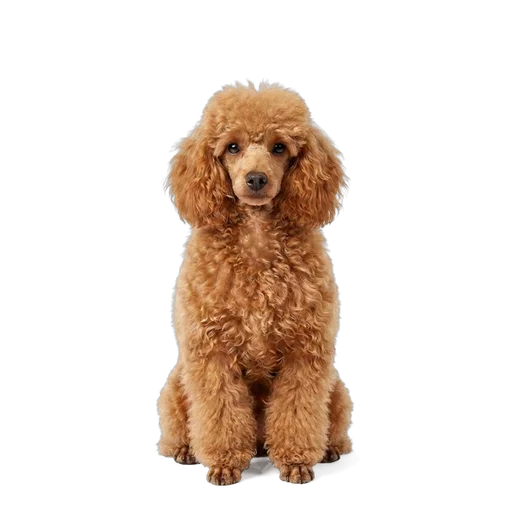
Deciding between similar breeds? Here is the Standard Poodle next to Briard and Miniature Poodle.
| Standard Poodle | Briard | Miniature Poodle | |
|---|---|---|---|
| Size | Large | Large | Small |
| Weight | 20-32 kg | 25-45 kg | 5-9 kg |
| Lifespan | 12-15 yrs | 10-12 yrs | 13-16 yrs |
| Activity | Active | Active | Active |
| Shedding | Low | Low | Low |
| Good with kids | Yes | Yes | Yes |
| Apartment-friendly | Yes | No | Yes |
Frequently asked questions
Are Standard Poodles truly hypoallergenic?
No dog is 100 percent allergen-free, but the Standard Poodle is one of the better choices for allergy-sensitive homes. The dense curly coat sheds very little, so it releases less dander and hair into the air. Many people who react to other breeds tolerate a Poodle well, though the only real test is spending time with one before committing.
How much exercise does a Standard Poodle need?
Plan on at least an hour of real activity a day, plus mental work. These are athletic retrievers, and a walk around the block does not cut it. Swimming, fetch, running, and training games all suit them. Skip the mental side and a bored Poodle becomes destructive, so puzzle toys and trick training are as important as the physical exercise.
Do Standard Poodles bark a lot?
They can. Poodles are alert and will announce visitors, strange noises, and anything out of routine. It is manageable with training and enough daily stimulation, but a Poodle left bored and under-exercised often barks out of frustration. Address the boredom and most of the nuisance barking fades.
Is bloat really a risk for this breed?
Yes. Standard Poodles are deep-chested, which raises the risk of gastric dilatation-volvulus. Feed two smaller meals instead of one large one, avoid vigorous exercise right around mealtimes, and learn the warning signs: a swollen belly, unproductive retching, and restlessness. Bloat is a true emergency, so get to a vet immediately if you suspect it.
Are Standard Poodles good for first-time owners?
They can be a great first dog for someone active who is ready for the grooming commitment. Poodles are eager to please and easy to train, which forgives beginner mistakes. The catch is the coat: daily brushing and a clip every 4 to 6 weeks are not optional. If you can commit to that, a Standard Poodle is a rewarding first breed.
Related breeds

Health and care information is drawn from established veterinary sources and is general guidance, not veterinary advice. See our sources
Keep records for your Standard Poodle
Vaccinations, food and treat safety, allergy alerts and parasite reminders - all tracked for your Standard Poodle in the Pethls app.