

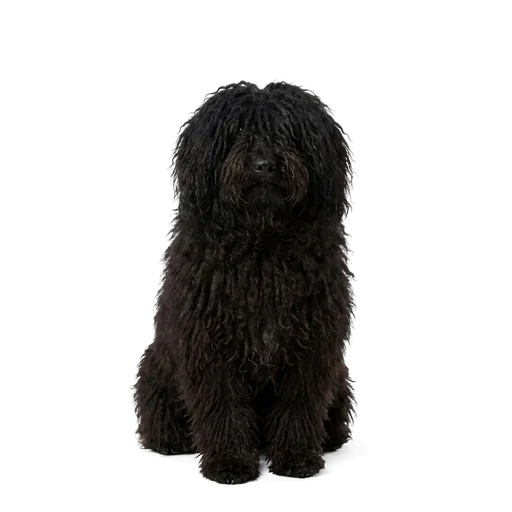
Origin: Hungary
Puli
Get reminders for your Puli's vaccines
Vaccination and parasite reminders, food-safety scans and health records — free to start in the Pethls app.


Good for
The Puli is the Hungarian herding dog that looks like a mop and moves like an acrobat. Under those famous cords sits a light, springy dog of 11 to 16 kilograms that can turn on a coin, clear a fence from a standstill and bounce straight up to see over the flock, a move shepherds have relied on for centuries. Pulik (that is the correct plural) are clever, vocal, deeply loyal to their people and openly suspicious of everyone else. The corded coat is the breed's signature and its biggest commitment. Expect a lifespan of 10 to 15 years and a dog that never really stops watching the horizon.
Temperament & personality
A Puli is a spring-loaded dog. The breed worked as the nimble daytime herder of Hungarian flocks, doing the fast, close-in work while bigger breeds guarded at night, and that job built a dog that is quick, athletic and always slightly ahead of you. Pulik jump, whether at the window, off the back of the sofa, or straight up in the air when the lead comes out. If that much physical energy bothers you, this is the wrong breed.
Loyalty runs deep and narrow. A Puli bonds hard to its family and typically treats strangers with open suspicion until formally introduced, which made it a superb farm alarm and makes early, extensive socialization essential in a pet home. They are also genuinely vocal. Barking is how a Puli did its job, and it will comment on delivery vans, birds and suspicious leaves unless you train an off switch early.
The intelligence is real and it needs somewhere to go. Pulik excel at agility, obedience, herding trials and trick training, and they learn fast enough that sloppy handling teaches them the wrong things equally fast. With children in their own family they are usually playful and protective, though the herding nip can surface around running kids, so supervise and redirect. With household cats and dogs they generally coexist well once raised together. An under-exercised Puli in a quiet apartment becomes a one-dog noise complaint; a well-exercised one can adapt to city life surprisingly well.
Vaccination schedule
Puli puppies need the standard core series. DHPP, the combination shot covering distemper, hepatitis (adenovirus), parainfluenza and parvovirus, is given at 6 to 8 weeks, again at 10 to 12 weeks, and a final dose at 14 to 16 weeks. Do not cut the series short because your puppy seems healthy; the last dose is the one most likely to take, once maternal antibodies fade. Rabies follows at 12 to 16 weeks depending on where you live.
DHPP and rabies are both boosted at around one year, after which adult Pulik typically move to a three-year DHPP cycle, with rabies renewed annually or every three years as local law dictates.
Lifestyle vaccines matter for this breed more than most, because a Puli that is exercised properly gets out a lot. Dogs doing agility, herding, dog parks or boarding should discuss Bordetella and canine influenza; dogs in wet, rural or wildlife-heavy areas need leptospirosis seriously considered, and Lyme in tick regions. One practical note: vaccines are injected at the skin, and finding an injection site reaction under cords is hard, so ask your vet to note the site and check it yourself at the next coat session. Keep a written record of every dose so boosters do not depend on memory.
Best food & diet
At 11 to 16 kilograms the Puli is a small-to-medium athlete, and it should be fed like one: a complete diet appropriate for its life stage, measured out rather than free-poured. Puppies stay on a growth formula until around 12 months, and because hip dysplasia occurs in the breed, keeping puppies lean through the growth phase protects developing joints. Fat Puli puppies are not cute, they are pre-arthritic.
Most adults need somewhere around 700 to 1,100 calories a day, with active sport dogs at the top of that range or above. The catch is that a corded coat completely hides body condition. A Puli can gain 15 percent of its body weight and look identical. Weigh monthly on an actual scale and log it, and use your hands under the cords along the ribs and waist to judge condition.
For dogs competing in agility or doing real herding work, feed the main meal well after exercise, not before, and consider splitting daily food into two or three meals. Fish oil at a vet-advised, weight-based dose supports joints in an athletic breed and is a reasonable addition from middle age. Fresh water always, and more of it than you expect after a full bath, which is an event in this breed.
Common health problems
Pulik are a hardy, long-lived breed, with many reaching 14 or 15, but four inherited conditions are documented. Hip dysplasia comes first: bad hip conformation leads to laxity and early arthritis, a particular problem in such an active breed. Insist on OFA or FCI hip scores for both parents, keep the dog lean, and take reluctance to jump seriously in a Puli, because a normally springy dog that suddenly holds back is often telling you something hurts.
Progressive retinal atrophy (PRA) causes slow retinal degeneration, beginning with poor vision in dim light and ending in blindness. There is no cure, though blind Pulik cope well in familiar surroundings. DNA testing identifies carriers before breeding, and an ophthalmologist exam can catch changes early.
Degenerative myelopathy (DM) is a progressive spinal cord disease of older dogs, similar in mechanism to ALS in humans, starting with hind-end weakness and dragging toes and advancing to paralysis over months to years. A DNA test for the SOD1 mutation exists, and breeders should test. Two copies means a dog is at risk rather than certain to develop DM, since many never show clinical signs, so ask the breeder for the parents' SOD1 results. There is no treatment, but physiotherapy slows functional decline.
Congenital deafness also appears in the breed. It is testable in puppies from about six weeks using BAER (brainstem auditory evoked response) testing. A deaf Puli can live a full life with vibration and hand-signal training, but you should know before you buy, not discover it when recall training mysteriously fails. Regular vet checks plus keeping written notes of any symptoms help spot the slow-onset conditions, DM especially, earlier than memory alone would.
Allergies & skin
The Puli often lands on hypoallergenic breed lists because it barely sheds, and that claim needs an honest correction. Shed hair is not the allergen. Dog allergies react to proteins in dander and saliva, and Pulik produce both. What is true: the cords trap dead hair and dander instead of distributing them around your home, so environmental allergen load can be lower than with a shedding breed. Some allergic households manage fine with a Puli; others do not. Test with real exposure first.
Skin under cords lives in its own microclimate, and that is the main clinical issue. Cords that stay damp after rain, swimming or a bath create a warm, airless environment where yeast and bacteria thrive, and by the time you smell the problem it is established. Complete drying after any soaking is a skin-health measure, not a cosmetic one. Musty odor, scratching or excessive skin flake in the cord partings warrants a vet visit.
True allergies, environmental or food-based, show up in Pulik as they do in any dog: paw chewing, face rubbing, recurrent ear infections, belly redness. The corded coat delays discovery, so make skin inspection part of every cord-separation session. Part cords to the skin in several places and actually look. If itching persists across seasons, ask your vet about an elimination diet trial before reaching for repeated symptomatic treatments.
Flea, tick & worm prevention
A corded coat is one of the best flea hiding places in dogdom. You will not spot fleas by looking, and you may not spot ticks until they are engorged. That makes reliable, calendar-driven prevention non-negotiable for a Puli. Oral isoxazoline preventives have a practical advantage in this breed because they do not depend on spreading across the skin through a dense coat, and nothing washes off in the breed's marathon baths. Discuss the right product with your vet and dose by current weight.
Add a hands-on check to every grooming session. Part cords to the skin at the neck, behind the ears, in the armpits and groin, and around the tail base, and look for flea dirt, the black specks that smear rust-red on a wet tissue. After walks in tall grass or woodland, run your fingers through the cords against the skin; you will feel a tick before you ever see one.
Worming is standard: puppies every two weeks from 2 to 8 weeks old, then monthly to six months, then either monthly broad-spectrum prevention or faecal-test-driven deworming two to four times yearly for adults. Herding dogs with livestock contact need a specific conversation about tapeworm protocols. Heartworm prevention applies wherever mosquitoes carry it. Write the whole schedule down once and set reminders on your phone, because with this coat, prevention is the only strategy that works.
Medications & dosing
All medication for a Puli should be weight-based and vet-directed. The breed spans 11 to 16 kilograms, which crosses product weight bands for many parasite preventives, so a dose that suited your Puli at ten months may be wrong at three years. Weigh the dog, not the coat: a fully corded adult can carry a surprising amount of coat weight, and a soaked coat adds more, so weigh when dry and consistently groomed for the fairest number.
Human medicines are off the table. Ibuprofen, naproxen and paracetamol cause ulcers, kidney damage and liver failure in dogs at small doses. For pain, which an active breed like this may eventually need managed as joints age, vets prescribe canine NSAIDs such as carprofen or meloxicam at weight-calculated doses, with bloodwork to monitor long-term use.
Two breed-specific notes. First, topical spot-on products are awkward with cords: they need skin contact, application takes care, and frequent bathing shortens their effective life, which is another argument for oral preventives. Second, if your Puli carries DM risk genes, mention it whenever a new vet sees hind-end weakness, so the diagnostic path starts in the right place. Keep a written record of every product, dose, weight and date; a two-year dosing history is worth a lot at a specialist referral.
Grooming & coat care
The cords are the whole story. A Puli puppy starts with a soft, fluffy coat. Somewhere between 8 and 10 months the soft undercoat and the coarser outer coat begin to felt together into clumps, and your job for the next year or so is to separate those clumps by hand into individual cords, tearing each mat lengthwise down to the skin so it forms several pencil-to-finger-width cords instead of one plate of felt. Ten to twenty minutes several times a week through the cording phase beats a marathon session monthly. No brushing, ever, once cording begins; brushes destroy cords.
A mature corded coat is lower maintenance week to week than most people expect, but never zero. Regular sessions separating cords at the base keep them from fusing into mats, especially behind the ears, under the collar and in the armpits. The trade-off arrives at bath time. Wetting a corded coat through takes ages, rinsing shampoo out takes longer, and drying is the real commitment: hours with fans or a forced-air dryer, sometimes the better part of a day. A cord that stays damp at the core grows mildew and smells like a forgotten towel, so never bathe a Puli you cannot fully dry.
The payoff is genuinely minimal shedding. Dead hair stays in the cords instead of on your floor, which is exactly why the breed has its low-allergen reputation. Practical upkeep beyond the coat: trim cords for ground clearance and around the mouth for hygiene, keep the sanitary area short, check and clean ears weekly since the ear canal hides under heavy cords, do nails every three to four weeks, and part the cords over the eyes or trim for vision. Many pet owners eventually choose to keep their Puli in a shorter clipped coat instead, which is a perfectly legitimate choice the dog will not resent.
How the Puli compares
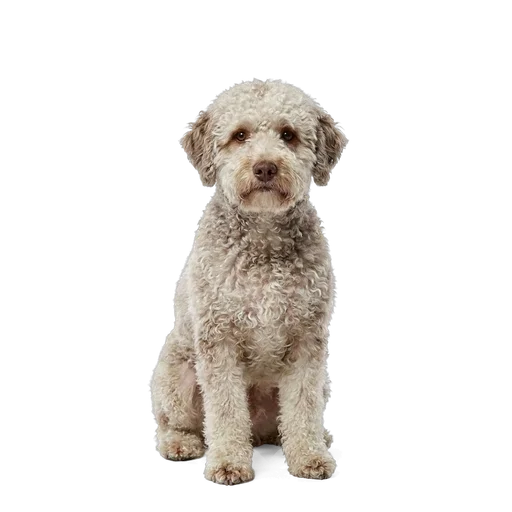
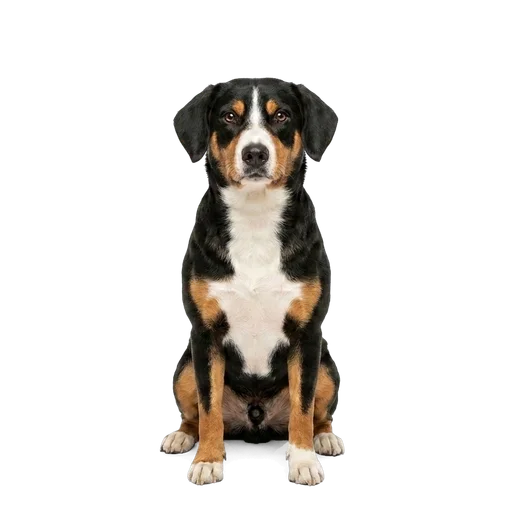
Deciding between similar breeds? Here is the Puli next to Lagotto Romagnolo and Entlebucher Mountain Dog.
| Puli | Lagotto Romagnolo | Entlebucher Mountain Dog | |
|---|---|---|---|
| Size | Medium | Medium | Medium |
| Weight | 11-16 kg | 11-16 kg | 20-30 kg |
| Lifespan | 10-15 yrs | 15-17 yrs | 11-13 yrs |
| Activity | Active | Active | Active |
| Shedding | Low | Low | Medium |
| Good with kids | Yes | Yes | Yes |
| Apartment-friendly | Yes | Yes | No |
Frequently asked questions
Is the Puli hypoallergenic?
No breed truly is, and the Puli is no exception; the allergens live in dander and saliva, which every Puli produces. All the same, the corded coat sheds almost nothing and traps dander, so many allergy sufferers find Pulik easier to live with. Spend time around adult Pulik before deciding.
How do Puli cords form, and do I have to do anything?
Cords start forming naturally at 8 to 10 months as the undercoat felts into the outer coat. Your job is to separate the felting clumps by hand, tearing them lengthwise to the skin so they become individual cords instead of solid mats. The active cording phase lasts up to a year and needs short sessions several times a week.
How long does it take to bathe and dry a Puli?
Budget most of a day. Wetting and rinsing a corded coat is slow, and drying takes hours with fans or a forced-air dryer. Never leave the cords damp at the core, because trapped moisture leads to mildew, odor and skin infections.
Are Pulik good apartment dogs?
They can be, with two caveats: exercise and noise. A Puli with a real daily outlet for its energy and brain settles well indoors at this size. But the breed is naturally vocal and suspicious of strangers, so hallway noises get commentary unless you train quiet cues early.
What DNA tests should Puli breeders do?
Ask for the degenerative myelopathy (SOD1) DNA test and PRA testing on both parents, plus OFA or FCI hip scores. BAER hearing testing of puppies is a strong plus, since congenital deafness occurs in the breed. Good breeders volunteer this paperwork.
Related breeds
Health and care information is drawn from established veterinary sources and is general guidance, not veterinary advice. See our sources
Keep records for your Puli
Vaccinations, food and treat safety, allergy alerts and parasite reminders - all tracked for your Puli in the Pethls app.