


Origin: United States
Treeing Walker Coonhound
Get reminders for your Treeing Walker Coonhound's vaccines
Vaccination and parasite reminders, food-safety scans and health records — free to start in the Pethls app.


Good for
Hunters call the Treeing Walker Coonhound the people's choice, and the nickname fits: fast, smart, loud, and genuinely friendly, this is the coonhound most likely to win over the whole family. Bred from Walker Foxhound stock, he was built to run raccoons up trees all night and bay at everything he finds. At 20 to 32 kg with a lifespan of 12 to 13 years, he is a hardy, athletic dog with modest health baggage. The catch is the motor. Many Walkers land in shelters because owners fell for the sweet face and underestimated the drive, so be honest about your ability to provide serious daily exercise and a genuinely secure yard before bringing one home.
Temperament & personality
The Walker temperament splits cleanly down the middle. Indoors, a well-exercised Walker is affectionate, cuddly to the point of demanding couch access, and easy with children and other dogs thanks to generations of pack work. Strangers get a wagging tail, which makes him a poor guard dog and a great companion.
Outdoors, the hunting engine starts. This is one of the fastest, hottest-nosed coonhounds ever bred, and when a scent crosses his path he will be gone, over or under fences that would hold most dogs. Recall training helps but will never be trustworthy against fresh raccoon scent. A six-foot fence checked regularly for gaps is basic equipment, and leashes are mandatory anywhere unfenced.
He is smarter than the stubborn-hound stereotype suggests, learning routines fast and solving problems like latch mechanisms when motivated. That intelligence needs a job. A bored Walker invents work: baying at the window, excavating the yard, dismantling furniture. Shelters across the US are full of adolescent Walkers surrendered for exactly these behaviors, and nearly all of them are simply under-exercised, not bad dogs.
Cats and small pets are case by case. Walkers raised with cats often coexist fine indoors, but the chase instinct outdoors is strong, and pocket pets should be considered off limits.
Vaccination schedule
Puppies need the core DHPP series (distemper, adenovirus/hepatitis, parainfluenza, parvovirus) beginning at six to eight weeks and repeating every three to four weeks until at least 16 weeks old. Parvovirus in particular hits hound puppies hard, so do not shortcut the final dose. Rabies is given at 12 to 16 weeks, per local law, boosted at one year, and then every one to three years.
Adult Walkers get a DHPP booster at one year, then typically every three years. Leptospirosis is now a core vaccine recommended for every dog, so plan on it regardless of lifestyle; it takes a 2-dose puppy series and then an annual booster, unlike the every-three-years DHPP core boosters. For a breed this outdoorsy the exposure risk runs high, since access to ponds, creeks, or wildlife is exactly where lepto spreads, which is one more reason not to skip that yearly booster. Among the non-core vaccines, Lyme matters in tick-endemic regions, which covers most of the eastern US where these hounds are common. Dogs who hunt competitively or board frequently should add bordetella and canine influenza per your vet's advice.
Coordinate boosters before hunting season starts so protection is at full strength when exposure peaks.
Best food & diet
Feed to the workload. A Walker running trails several nights a week burns calories like a sled dog and may need a performance formula around 30 percent protein and 20 percent fat during hunting season. The same dog living as a pet on two brisk walks a day does fine on a standard quality adult food, roughly 1,200 to 1,700 kcal daily depending on size and metabolism. Adjust by body condition, not by the bag chart; you should feel ribs under a thin fat layer and see a defined waist from above.
Puppies grow fast and lean. A large-breed puppy formula keeps growth controlled, which matters given hip dysplasia in the breed's background. Skip calcium supplements; balanced puppy food already covers it.
Walkers are notorious counter surfers and food thieves, athletic enough to reach shelves other dogs cannot. Secure the trash, and account for stolen calories when a previously lean dog starts thickening. Splitting food into two meals a day, rather than one large meal, plus a rest period after eating before hard exercise, is sensible bloat (gastric dilatation-volvulus) insurance for a big, active dog. The Walker is not a classic high-risk deep-chested breed, but the habit costs nothing and matters most on heavy hunting days when a dog gulps food and water fast.
Common health problems
Good news first: the Treeing Walker is one of the hardier purebreds, shaped by generations of performance breeding where unsound dogs simply did not stay in the gene pool. Many live their 12 to 13 years with little more than routine care.
Ear infections (otitis externa) top the problem list. The hanging ears limit airflow, and a night of running through wet brush leaves canals damp and debris-filled. Head shaking, scratching, odor, and dark discharge are your early warnings. Treated promptly, most infections clear quickly; ignored, they become chronic and can permanently narrow the canal.
Hip dysplasia occurs in the breed, though less often than in heavier hounds. Watch for a bunny-hopping gait, difficulty rising, or a dog who suddenly quits jumping into the truck bed. Buying from breeders who screen hips, keeping weight lean, and building muscle through steady exercise are the practical defenses.
Beyond genetics, the Walker's main health risks are occupational: cuts, sprains, snake bites, and barbed-wire injuries for hunting dogs, plus tick-borne diseases like ehrlichiosis and Lyme. A post-hunt once-over from nose to tail catches most problems while they are still small.
Allergies & skin
Walkers are not hypoallergenic. The short tricolor coat sheds moderately year-round and carries standard dander, so allergic households should spend time around the breed before committing.
The dog's own skin is generally low maintenance, but allergies do occur and usually announce themselves through the ears and feet. A Walker with recurring ear infections, stained paws from licking, or belly redness after time in grass likely has an environmental allergy. Since these dogs spend more time chest-deep in vegetation than almost any pet breed, pollen and contact allergens get plenty of opportunity.
Flea allergy dermatitis causes intense chewing over the rump and tail base and is entirely preventable with consistent flea control. Hot spots can flare fast in warm months, especially where wet coat sits against skin after a swim or rainy hunt. Toweling the dog dry and checking skin folds and armpits after wet outings prevents most of them. Persistent itching without a parasite explanation deserves a vet workup rather than a rotating cast of over-the-counter shampoos.
Flea, tick & worm prevention
No breed profile takes parasite prevention more seriously than a coonhound's. Night hunts through brush and timber are peak tick exposure, and Walkers routinely come home carrying passengers. Year-round monthly prevention with a modern isoxazoline chewable is the standard recommendation; oral products beat collars for dogs working in heavy cover where collars snag or wear. In hard-hit regions, some vets layer a repellent product on top during peak season.
Physical tick checks after every outing are still essential because no product kills instantly. Work through the ears, lips, armpits, groin, toes, and tail. Finding and removing ticks within 24 hours dramatically cuts disease transmission risk. Annual screening bloodwork that covers heartworm plus Lyme, ehrlichia, and anaplasma is cheap insurance for a dog with this lifestyle.
Heartworm preventive is monthly, year-round, everywhere in the US. For intestinal worms, a hound who noses through raccoon territory has above-average exposure, including to raccoon roundworm. Keep up monthly broad-spectrum prevention, run fecal exams once or twice yearly, and deworm for tapeworms if your dog hunts or has had fleas.
Medications & dosing
Every routine medication your Walker takes, from heartworm preventive to antibiotics, is dosed by weight, and the breed's 20 to 32 kg range spans several dosing brackets. A lanky 22 kg female and a solid 30 kg male are different patients. Weigh your dog at least yearly, or before any new prescription, and buy preventives in the correct weight band rather than splitting large doses between dogs.
Active hounds earn their share of injuries, and the temptation to raid the human medicine cabinet is where things go wrong. Ibuprofen, naproxen, and acetaminophen range from dangerous to lethal in dogs. For sprains and arthritis, vets prescribe dog-specific NSAIDs like carprofen at exact weight-based doses, usually with baseline bloodwork if use will be prolonged.
Ear medications deserve the same discipline as antibiotics: full course, every dose, plus the recheck. Half-treated coonhound ears relapse almost by default. If your dog hunts, keep a vet-approved first-aid kit with wound cleaning supplies and know your emergency clinic's location before season opens, because paw pad cuts and barbed-wire tears rarely happen during office hours.
Grooming & coat care
The Walker's short tricolor coat is about as easy as dog coats get. A weekly once-over with a hound glove or rubber curry removes loose hair and keeps the coat glossy; expect moderate shedding year-round with a modest spring uptick. Baths are needed only every couple of months, or whenever a hunt ends in something dead and delicious. Hound smell is milder in Walkers than in some cousins but not absent.
Ears are the real chore. Inspect weekly at minimum, clean with a proper ear cleaner when waxy, and always after swimming or wet-weather work, drying the canal gently. Catching redness or odor early means a quick cleanup instead of a course of medication.
Nails on a hard-running Walker often self-trim on rough ground; pet Walkers need clipping every three to four weeks. Check paw pads regularly for cracks and embedded seeds, especially after field time. Add tooth brushing a few times a week and the whole grooming routine still fits inside 20 minutes, which leaves more time for the exercise this breed actually requires.
How the Treeing Walker Coonhound compares
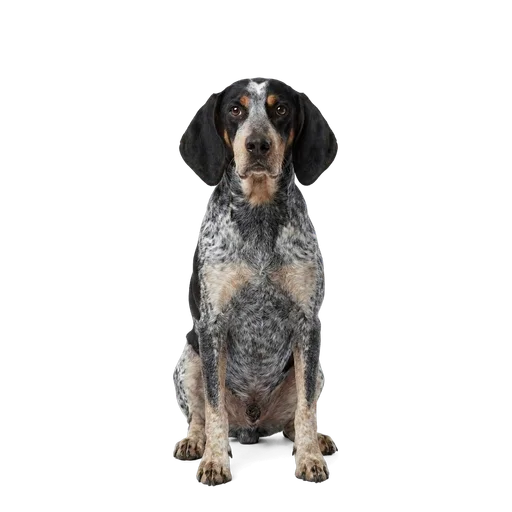
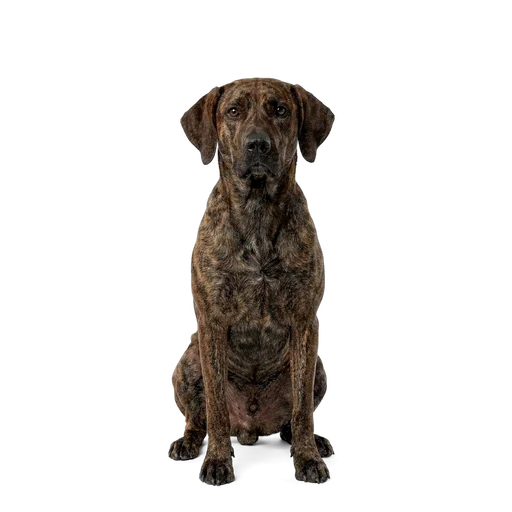
Deciding between similar breeds? Here is the Treeing Walker Coonhound next to Bluetick Coonhound and Plott Hound.
| Treeing Walker Coonhound | Bluetick Coonhound | Plott Hound | |
|---|---|---|---|
| Size | Large | Large | Large |
| Weight | 20-32 kg | 20-36 kg | 18-27 kg |
| Lifespan | 12-13 yrs | 11-12 yrs | 12-14 yrs |
| Activity | Active | Active | Active |
| Shedding | Medium | Medium | Medium |
| Good with kids | Yes | Yes | Yes |
| Apartment-friendly | No | No | No |
Frequently asked questions
Why do so many Treeing Walker Coonhounds end up in shelters?
Mostly mismatched expectations. Walkers look like easygoing medium-large dogs, but they were bred to run all night, and an under-exercised Walker bays, digs, and escapes. Adolescent dogs surrendered for these behaviors usually just needed more exercise and containment. Adopters who understand the drive often find them wonderful, affectionate pets.
How much exercise does a Treeing Walker Coonhound need?
A lot. Plan on 90 or more minutes of real activity daily: running, hiking, scent games, or field work, not just a stroll around the block. Mental work like tracking exercises counts double. A tired Walker is a sweet, snuggly house dog; an under-exercised one is a demolition project.
Are Treeing Walker Coonhounds good with kids and other dogs?
Generally yes. Pack breeding made them tolerant, social dogs, and most are patient with children and friendly toward other dogs. Supervise around toddlers simply because an excited Walker moves fast and forgets his size. Cats are workable if raised together indoors; small caged pets are not a safe combination.
Can a Treeing Walker Coonhound live in an apartment?
It is a poor fit. The breed's baying carries through walls, and meeting its exercise needs without a yard demands multiple long daily outings in all weather. A house with a secure six-foot fence and an active owner is the realistic setup.
Are Treeing Walker Coonhounds healthy?
They are among the hardier purebreds, commonly living 12 to 13 years. The main issues are ear infections from those hanging ears and some hip dysplasia in the breed. For hunting dogs, tick-borne disease and field injuries are bigger day-to-day risks than genetics, so prevention and post-hunt checks matter.
Related breeds
Health and care information is drawn from established veterinary sources and is general guidance, not veterinary advice. See our sources
Keep records for your Treeing Walker Coonhound
Vaccinations, food and treat safety, allergy alerts and parasite reminders - all tracked for your Treeing Walker Coonhound in the Pethls app.